Arizona Immigration Laws

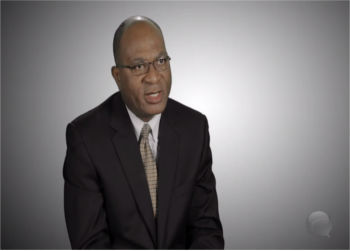
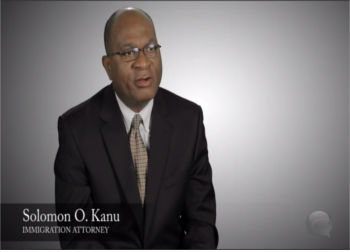
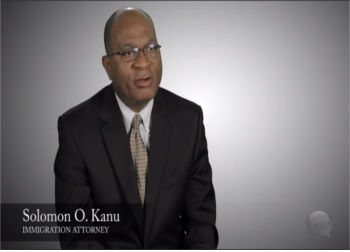
Solomon O. Kanu - Profile Video | Phoenix Immigration Law

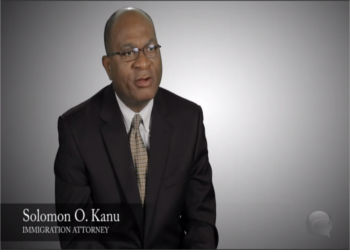
Solomon O. Kanu


About Solomon Kanu

I was born in Nigeria and I came to the United States in 1991. I became a US citizen in 2000 and I have been in Arizona since 2001. Immigration laws come very natural to me because I’ve been an immigrant but I don’t just do immigration law. I look at the immigrant holistically. They want to go from being a visitor to being a permanent resident to being a US citizen owning businesses. That part is very, very rough. I look at them as people that have to be taken care of from day one to the end.   Where you’re born doesn’t have to be where you live or where you die. The freedom that you get living in the United States is unbelievable. People want to be part of this because once they experience this people want to experience it for their grandchildren. And so I understand why they want to be here. This is such a blessing for me naturally because this is what I think I’ve been called to do.

About Solomon Kanu

I was born in Nigeria and I came to the United States in 1991. I became a US citizen in 2000 and I have been in Arizona since 2001. Immigration laws come very natural to me because I’ve been an immigrant but I don’t just do immigration law. I look at the immigrant holistically. They want to go from being a visitor to being a permanent resident to being a US citizen owning businesses. That part is very, very rough. I look at them as people that have to be taken care of from day one to the end.   Where you’re born doesn’t have to be where you live or where you die. The freedom that you get living in the United States is unbelievable. People want to be part of this because once they experience this people want to experience it for their grandchildren. And so I understand why they want to be here. This is such a blessing for me naturally because this is what I think I’ve been called to do.

What is Family Immigration | Phoenix Immigration Law

Solomon O. Kanu


Family Immigration

Family immigration is one of my favorite areas because it brings families together. It deals with parents filing for children, children filing for parents, spouses filing for each other, siblings filing for fellow siblings. In some situations, even step-parents filing for their children. It does bring families together.

Kanu & Associates

We’re very knowledgeable this area of immigration and we do this very well. If you’re thinking of coming to United States or you’re already in United States, you were even born in United States, but you want to bring your parent or your brother, your sister to United States, we will help you. That’s what we love to do. That’s what we have passion for. We’ve been successful in the past and we’ll help to bring the families together.

By: Solomon Kanu

Family Immigration

Family immigration is one of my favorite areas because it brings families together. It deals with parents filing for children, children filing for parents, spouses filing for each other, siblings filing for fellow siblings. In some situations, even step-parents filing for their children. It does bring families together.

Kanu & Associates

We’re very knowledgeable this area of immigration and we do this very well. If you’re thinking of coming to United States or you’re already in United States, you were even born in United States, but you want to bring your parent or your brother, your sister to United States, we will help you. That’s what we love to do. That’s what we have passion for. We’ve been successful in the past and we’ll help to bring the families together.

By: Solomon Kanu

What is an EB-11 Visa and How Can I Qualify | Ohio

Marisela J. Marquez


I want to talk to you about the EB-11 or Extraordinary Abilities Visa. The EB-11 Visa is available to any immigrant who can demonstrate that they are at the top of the field of endeavor, and have extraordinary abilities in almost any profession or career. There are two ways to prove that you have extraordinary ability.

The first is to demonstrate that you have received a major internationally recognized award in the field such as the Nobel Prize. The second is to provide evidence that meet at least three out of ten criteria set forth by immigration regulations such as having judged the work of others in the field, authored scholarly publications, or produced an original contribution of major significance to the field.  An immigration officer will then conduct a Final Merits Determination where they consider the entire petition and determine whether or not you have achieved national or international acclaim, and that your achievements are recognized in the field.

There are many benefits to this type of immigration Visa classification. For example, EB-11s have the ability to self-petition. Meaning they do not need an employer to sponsor them. They can also bypass the burdensome labor certification process. If you think you might qualify as an individual with extraordinary ability, you should contact an experienced immigration attorney to help with this complex case. The passion of our staff can’t be beat. We share your joy and we share your tears. We understand that immigration practice is more about winning or losing cases. It’s about changing lives.

By: Marisela Marquez

I want to talk to you about the EB-11 or Extraordinary Abilities Visa. The EB-11 Visa is available to any immigrant who can demonstrate that they are at the top of the field of endeavor, and have extraordinary abilities in almost any profession or career. There are two ways to prove that you have extraordinary ability.

The first is to demonstrate that you have received a major internationally recognized award in the field such as the Nobel Prize. The second is to provide evidence that meet at least three out of ten criteria set forth by immigration regulations such as having judged the work of others in the field, authored scholarly publications, or produced an original contribution of major significance to the field.  An immigration officer will then conduct a Final Merits Determination where they consider the entire petition and determine whether or not you have achieved national or international acclaim, and that your achievements are recognized in the field.

There are many benefits to this type of immigration Visa classification. For example, EB-11s have the ability to self-petition. Meaning they do not need an employer to sponsor them. They can also bypass the burdensome labor certification process. If you think you might qualify as an individual with extraordinary ability, you should contact an experienced immigration attorney to help with this complex case. The passion of our staff can’t be beat. We share your joy and we share your tears. We understand that immigration practice is more about winning or losing cases. It’s about changing lives.

By: Marisela Marquez

Deportation Process (Video) | Phoenix Immigration Law

Solomon O. Kanu


Deportation or Removal

Deportation is the process of removing an alien from United States. It is also called removal, so removal proceedings, where someone is in United States is removed to their country, or any other country that would take the foreigner. It is one word that every foreigner dreads. Whether the foreigner is in proceedings, or their family member is in proceedings, is very frustrating. It’s one thing that I would never advise anyone to do on their own. I’ve advised people sometimes, to file some of the immigration papers themselves, but when it comes to deportation, it is so complicated that you definitely need a lawyer.

Defending Against Deportation

Now, we’ve been very successful in this, because we realize that most people that come to the United States, do really want to be here. They actually want to be here even for themselves, for their children, for their grandchildren. It’s not a place where they come, and they want to go back. So, when the United States government wants to remove you from United States, you do need a lawyer. You do need a lawyer that is experienced. You do need a lawyer that has the passion. You do need a lawyer that knows why you want to be here, because some people don’t even know why you want to be here.

Kanu & Associates

We manage a very effective defense. We have all the skill, and the enthusiasm to persuade the court to keep the person here. We’ve been very successful. Most of the cases we’ve taken, we’ve always been successful, because we analyze the case as well, before we take them. Even though, we cannot promise the outcome of the case, we promise the best efforts that we have, to ensure that people get relief from deportation.

By: Solomon Kanu

Deportation or Removal

Deportation is the process of removing an alien from United States. It is also called removal, so removal proceedings, where someone is in United States is removed to their country, or any other country that would take the foreigner. It is one word that every foreigner dreads. Whether the foreigner is in proceedings, or their family member is in proceedings, is very frustrating. It’s one thing that I would never advise anyone to do on their own. I’ve advised people sometimes, to file some of the immigration papers themselves, but when it comes to deportation, it is so complicated that you definitely need a lawyer.

Defending Against Deportation

Now, we’ve been very successful in this, because we realize that most people that come to the United States, do really want to be here. They actually want to be here even for themselves, for their children, for their grandchildren. It’s not a place where they come, and they want to go back. So, when the United States government wants to remove you from United States, you do need a lawyer. You do need a lawyer that is experienced. You do need a lawyer that has the passion. You do need a lawyer that knows why you want to be here, because some people don’t even know why you want to be here.

Kanu & Associates

We manage a very effective defense. We have all the skill, and the enthusiasm to persuade the court to keep the person here. We’ve been very successful. Most of the cases we’ve taken, we’ve always been successful, because we analyze the case as well, before we take them. Even though, we cannot promise the outcome of the case, we promise the best efforts that we have, to ensure that people get relief from deportation.

By: Solomon Kanu

Immigration Law History & Experience - Part 1 | Ohio

Margaret W. Wong


We have nationality traits. Like the Russians, the Ukrainians, they’re very different from the Philipinos because of the high and the different fraud level. The level of fraud is different. Nigerians is very different from Sudan, very different from South Africans, and it’s very different from Kenyans, Afghanistans, Pakistans. So it’s all different.  Like the fall of the Shah in the 80s and 70s. A lot of Iranians come to America. So with that, we did a lot of cases. But then the Marriage Fraud Act came in in 1984, and in ’86, IRCA came in. So all these are new changes, 1990 IMMACT 90, three strikes you’re out, by President Clinton that affected. So we have a lot of new things going in the past 35 years.  I’m also lucky because of the history I’ve been doing. Because once I started out in this practice, we used to have no secretary and one desk, and that’s me.

So I would run to Immigration, run back, because there’s no Xerox machine there. So I would run back to the office, make some Xerox, and run back. But now, immigration is growing. In those days, it’s a very small department of DOJ. In the olden, olden days, it’s with the Labor Department, then with DOJ. Now it’s with DHS, which is Homeland Security.  So some of the interesting cases we have done? We did Tony Pena, Jose Mesa. We did a lot of great tennis players. We did a lot of high-profile. But my pride and joy is really working with the everyday cases.

Each country– in the olden days, it’s quota. It’s priority-based. Now it’s still quota and priority-based– actually, in the olden, olden days, it’s hemisphere: eastern hemisphere, western hemisphere. But in ’94, the Civil Rights Act came in. ’95, the Quota Act came in, both by President Johnson. So people like us– I came in 1969. Actually, Taiwan kids came in ’66, ’65, ’67. And then Hong Kong kids came. And then the PRC came en masse in the past three or four years, because Hillary Clinton, before she resigned or retired from the State Department, really make more tourists and students come from overseas to enjoy our education system, to enjoy our touring, because our country– one of the increasing trade from our country should be from tourism and from education – foreign students – because foreign students pay three-times the school tuition than the in-state pay. Because foreign students have a F1 level, and then the general admission, and then the in-state tuition, which is lower than the general admission in all public schools.

So in the past few years, you see a lot more different countries coming to America on F1s. But about in the ’60s and ’70s, because Nixon and Kissinger did not open up the Far East until ’72 visit, ’78 visit, so en masse, all the Chinese came after ’78. But the Koreans came a lot earlier, because of the Korean War – ’51-’53, the Korean War – so Korea and the Philippines of course. In the Second World War, Philippines is a strong ally of America. That’s why in order to be a great immigration lawyer, you really need to know the world. Read the newspapers. Know the history.

By: Margaret Wong

We have nationality traits. Like the Russians, the Ukrainians, they’re very different from the Philipinos because of the high and the different fraud level. The level of fraud is different. Nigerians is very different from Sudan, very different from South Africans, and it’s very different from Kenyans, Afghanistans, Pakistans. So it’s all different.  Like the fall of the Shah in the 80s and 70s. A lot of Iranians come to America. So with that, we did a lot of cases. But then the Marriage Fraud Act came in in 1984, and in ’86, IRCA came in. So all these are new changes, 1990 IMMACT 90, three strikes you’re out, by President Clinton that affected. So we have a lot of new things going in the past 35 years.  I’m also lucky because of the history I’ve been doing. Because once I started out in this practice, we used to have no secretary and one desk, and that’s me.

So I would run to Immigration, run back, because there’s no Xerox machine there. So I would run back to the office, make some Xerox, and run back. But now, immigration is growing. In those days, it’s a very small department of DOJ. In the olden, olden days, it’s with the Labor Department, then with DOJ. Now it’s with DHS, which is Homeland Security.  So some of the interesting cases we have done? We did Tony Pena, Jose Mesa. We did a lot of great tennis players. We did a lot of high-profile. But my pride and joy is really working with the everyday cases.

Each country– in the olden days, it’s quota. It’s priority-based. Now it’s still quota and priority-based– actually, in the olden, olden days, it’s hemisphere: eastern hemisphere, western hemisphere. But in ’94, the Civil Rights Act came in. ’95, the Quota Act came in, both by President Johnson. So people like us– I came in 1969. Actually, Taiwan kids came in ’66, ’65, ’67. And then Hong Kong kids came. And then the PRC came en masse in the past three or four years, because Hillary Clinton, before she resigned or retired from the State Department, really make more tourists and students come from overseas to enjoy our education system, to enjoy our touring, because our country– one of the increasing trade from our country should be from tourism and from education – foreign students – because foreign students pay three-times the school tuition than the in-state pay. Because foreign students have a F1 level, and then the general admission, and then the in-state tuition, which is lower than the general admission in all public schools.

So in the past few years, you see a lot more different countries coming to America on F1s. But about in the ’60s and ’70s, because Nixon and Kissinger did not open up the Far East until ’72 visit, ’78 visit, so en masse, all the Chinese came after ’78. But the Koreans came a lot earlier, because of the Korean War – ’51-’53, the Korean War – so Korea and the Philippines of course. In the Second World War, Philippines is a strong ally of America. That’s why in order to be a great immigration lawyer, you really need to know the world. Read the newspapers. Know the history.

By: Margaret Wong

Acquire Religious Visa | Phoenix Visa Laws

Solomon O. Kanu


Religious Visas

Religious visas are visas that are carved out exclusively for people that are engaged in religious work. So they could be pastors. They could be rabbis. They could be imams coming from outside of the United States to do religious work here.

Religious Visas for Pastors

We’ve been very successful in doing that for people in the Catholic and Anglican church. We bring pastors and religious workers from all over the place. We insure when they come here and do what they say they’re going to do. It gives me a lot of joy each time I’m able to help a pastor concentrate on their pastoral work, because it’s very very difficult to come in and not know what to do. So we help all these churches. We help some of the dioceses in United States to bring pastors from all over the world, put them where they’re supposed to be. Ensure that the transition from being a religious worker to permanent residence because you do need to stay two years before you can apply for permanent residency when you come in on a religious visa. So we moved in from religious visa to permanent residency and eventually to U.S. citizenship. So it gives me so much joy when we do that.

Religious Visa Lawyer

It is one of the areas that I do sometimes do for less than my normal price because I have a some kind of special interest in helping religious workers, pastors, and other people that do religious work. I would never forget one of the people we helped from Romania that does his chanting in the Orthodox church– in the Romanian Orthodox church. By the time we were done to when my office with flowers just to thank me for what I did. But I said, “Well I charged you money. Why are you paying me?” They said, “You don’t know what you did for us.” Our church would have fallen apart but for this man. So it gives me joy when this churches can stay together because the pastors or the rabbis are there.

By: Solomon Kanu

Religious Visas

Religious visas are visas that are carved out exclusively for people that are engaged in religious work. So they could be pastors. They could be rabbis. They could be imams coming from outside of the United States to do religious work here.

Religious Visas for Pastors

We’ve been very successful in doing that for people in the Catholic and Anglican church. We bring pastors and religious workers from all over the place. We insure when they come here and do what they say they’re going to do. It gives me a lot of joy each time I’m able to help a pastor concentrate on their pastoral work, because it’s very very difficult to come in and not know what to do. So we help all these churches. We help some of the dioceses in United States to bring pastors from all over the world, put them where they’re supposed to be. Ensure that the transition from being a religious worker to permanent residence because you do need to stay two years before you can apply for permanent residency when you come in on a religious visa. So we moved in from religious visa to permanent residency and eventually to U.S. citizenship. So it gives me so much joy when we do that.

Religious Visa Lawyer

It is one of the areas that I do sometimes do for less than my normal price because I have a some kind of special interest in helping religious workers, pastors, and other people that do religious work. I would never forget one of the people we helped from Romania that does his chanting in the Orthodox church– in the Romanian Orthodox church. By the time we were done to when my office with flowers just to thank me for what I did. But I said, “Well I charged you money. Why are you paying me?” They said, “You don’t know what you did for us.” Our church would have fallen apart but for this man. So it gives me joy when this churches can stay together because the pastors or the rabbis are there.

By: Solomon Kanu

What Are E-1 & E-2 Visas | Phoenix Visa Laws

Solomon O. Kanu


E1 & E2 Visas

The E1, E2 visas are very popular visas for visitors from all around the world. There is a requirement that United States have a treaty with the country where you are applying from, but there are so many countries that United States has a treaty with. You can find that list from my website – www.kanulaw.com. We’ve done E1, E2 for people from Pakistan, from Australia, from Germany. We’ve done E1, E2 for people from Britain and we’ve done E1, E2 for people from so many countries.

Visa Popularity

It’s a very popular visa for people that have money to spend in United States. When they raise these funds, they’re able to create jobs for themselves and create jobs for United States citizens and permanent residents to the extent that their businesses flourish and are doing well. They can stay on that visa for a very long time. There’s actually no end time as long as the business is doing well. It’s a very good visa for people. Canada uses it a lot to come to the United States. Mexico also uses it to come to United States to invest and do their work. It allows people to go back and forth to their home country. It’s a very stable visa for middle income people that have some money to invest in U.S.

By: Solomon Kanu

E1 & E2 Visas

The E1, E2 visas are very popular visas for visitors from all around the world. There is a requirement that United States have a treaty with the country where you are applying from, but there are so many countries that United States has a treaty with. You can find that list from my website – www.kanulaw.com. We’ve done E1, E2 for people from Pakistan, from Australia, from Germany. We’ve done E1, E2 for people from Britain and we’ve done E1, E2 for people from so many countries.

Visa Popularity

It’s a very popular visa for people that have money to spend in United States. When they raise these funds, they’re able to create jobs for themselves and create jobs for United States citizens and permanent residents to the extent that their businesses flourish and are doing well. They can stay on that visa for a very long time. There’s actually no end time as long as the business is doing well. It’s a very good visa for people. Canada uses it a lot to come to the United States. Mexico also uses it to come to United States to invest and do their work. It allows people to go back and forth to their home country. It’s a very stable visa for middle income people that have some money to invest in U.S.

By: Solomon Kanu

Margaret W. Wong - Profile Video | Ohio Immigration

Margaret W. Wong


Hey, My name is Margaret Wong and I’m an immigration lawyer and I came to America in ’69. I was born and raised in Hong Kong. I went to an all girls, religious school since kindergarten. I came in ’69 with– right at the height of the Vietnam era with the kids in America against the Vietnam War, but never in my wildest dreams that I see what I’m doing now because in ’77 immigration work is not very hot. It’s very much like criminal work, very much like– it’s nothing compared to estate, tax, corporate where all lawyers want to work.

I turned out to be a great lawyer. That’s my passion. That’s my love.  But things really have changed. Years ago the same people don’t use the same lawyers like Middle East people they don’t like to go to Australian lawyer or Arabic lawyer because they their own people are not that people are not that powerful in America. But now things have changed. Because I speak fluent Chinese, we have a lot of Chinese clients coming to us because they just felt I’m one of them.

Also, because I speak the language of a foreign-born because I’m one. I came. I struggled. I was a chambermaid. I was a waitress. I was– you name it, I’ve done it. I cleaned toilets. I’ve done– I’m also the first one– normally the first one who comes into this office, turn on the light. I’m normally the last one to leave the office, turn off the light. It’s really a lot of fun.  Some highlights of this job. When we first started out– because in those day, there’s no 245-I. There’s no three or ten year bar. So people have no papers, they could still get the green card in America. But now they can’t. They have to go back to home country if they were not admitted or inspected or paroled.

To be a great lawyer you really have to know today’s world. You can’t always say, “yeah, but 30 years ago has happened.” Immigration law changes by the day, by the minute, by the hour. The Morton Memo who came out in November of year 2011, 2012. Now he retired and resigned. Homeland Security had mister– Miss Janet Napolitano also resigned. Now we’re working with a new head. These are things that we have to keep up, keep up, keep up.

By: Margaret Wong

Hey, My name is Margaret Wong and I’m an immigration lawyer and I came to America in ’69. I was born and raised in Hong Kong. I went to an all girls, religious school since kindergarten. I came in ’69 with– right at the height of the Vietnam era with the kids in America against the Vietnam War, but never in my wildest dreams that I see what I’m doing now because in ’77 immigration work is not very hot. It’s very much like criminal work, very much like– it’s nothing compared to estate, tax, corporate where all lawyers want to work.

I turned out to be a great lawyer. That’s my passion. That’s my love.  But things really have changed. Years ago the same people don’t use the same lawyers like Middle East people they don’t like to go to Australian lawyer or Arabic lawyer because they their own people are not that people are not that powerful in America. But now things have changed. Because I speak fluent Chinese, we have a lot of Chinese clients coming to us because they just felt I’m one of them.

Also, because I speak the language of a foreign-born because I’m one. I came. I struggled. I was a chambermaid. I was a waitress. I was– you name it, I’ve done it. I cleaned toilets. I’ve done– I’m also the first one– normally the first one who comes into this office, turn on the light. I’m normally the last one to leave the office, turn off the light. It’s really a lot of fun.  Some highlights of this job. When we first started out– because in those day, there’s no 245-I. There’s no three or ten year bar. So people have no papers, they could still get the green card in America. But now they can’t. They have to go back to home country if they were not admitted or inspected or paroled.

To be a great lawyer you really have to know today’s world. You can’t always say, “yeah, but 30 years ago has happened.” Immigration law changes by the day, by the minute, by the hour. The Morton Memo who came out in November of year 2011, 2012. Now he retired and resigned. Homeland Security had mister– Miss Janet Napolitano also resigned. Now we’re working with a new head. These are things that we have to keep up, keep up, keep up.

By: Margaret Wong

Immigration lawyers listing in .