Margaret W. Wong - Profile Video (Part 1-Chinese) | Ohio Immigration

Margaret W. Wong
By: Margaret Wong

By: Margaret Wong

By: Margaret Wong
By: Margaret Wong
The American History really controls the inflow, the immigrants of our people. But in the past 20 or 30 years, that’s where I lucked out because I came right at the height of the economic boom off of America. But now it’s difficult because now with the– because H1B law is only 65 number. In my days I was H1B. That’s unlimited numbers. The filing fee in my days is like $25. Now it’s just a filing fee of H1B is $1500. Anybody who hires more than 25 people, the $500 anti-fraud, $320 for the H1. If you have family and married, that’s another $300 including wife and kids. So if you have five kids and one husband, you still– it’s under the one filing fee of $340 so H1B.
So things have really changed. If you have Masters, if you have a net of $20,000– so by April first all these numbers that you stop. So both as an immigration lawyer and as clients, we are very in tuned to the timing of the year. The H2s are the Mexicans. On H2s they come to America by February, March, or April because that’s when all the seasonal work is coming, and they leave because Christmas is a big holiday in South America and Central America. So they normally go home at that time and come back. Then a lot of foreign students now because they all economically more powerful than we were when I came. When I came just a one-way airfare from the Far East is three, four thousand U.S. The exchange rate in those days is eight to one. Now it’s still eight to one. In China now six to one, 6.4 to 1. So in my days it cost like thousands of dollars to fly over on 90 day, 30 day boat ride. So we’d never go home. Even for New Years we’d pay– even though you’re willing to pay to stand in line in the dormitories to make a long distance call. One long distance call for one year. But we write letters. Of course in those days there’s no Google. The phone is still circular phone. It’s not a punch phone.
So I look back and I’m so glad of this program because it really makes me think how times have changed. But the work remains the same. To be a great anything, Minister, lawyer, doctor, cook, dry cleaner, you really have to be the best of the best. If not you won’t survive in America. It’s not like 30, 40 years ago. All of us expected a job. The unemployment rate was about one or two percent. Now it’s like– they say 7%. I think it’s like 15% now unemployment. You’re not good you’re not going to get a job. If you get a job you won’t be happy. So why work when you’re not happy and you really are not accomplishing your dreams.
By: Margaret Wong
The American History really controls the inflow, the immigrants of our people. But in the past 20 or 30 years, that’s where I lucked out because I came right at the height of the economic boom off of America. But now it’s difficult because now with the– because H1B law is only 65 number. In my days I was H1B. That’s unlimited numbers. The filing fee in my days is like $25. Now it’s just a filing fee of H1B is $1500. Anybody who hires more than 25 people, the $500 anti-fraud, $320 for the H1. If you have family and married, that’s another $300 including wife and kids. So if you have five kids and one husband, you still– it’s under the one filing fee of $340 so H1B.
So things have really changed. If you have Masters, if you have a net of $20,000– so by April first all these numbers that you stop. So both as an immigration lawyer and as clients, we are very in tuned to the timing of the year. The H2s are the Mexicans. On H2s they come to America by February, March, or April because that’s when all the seasonal work is coming, and they leave because Christmas is a big holiday in South America and Central America. So they normally go home at that time and come back. Then a lot of foreign students now because they all economically more powerful than we were when I came. When I came just a one-way airfare from the Far East is three, four thousand U.S. The exchange rate in those days is eight to one. Now it’s still eight to one. In China now six to one, 6.4 to 1. So in my days it cost like thousands of dollars to fly over on 90 day, 30 day boat ride. So we’d never go home. Even for New Years we’d pay– even though you’re willing to pay to stand in line in the dormitories to make a long distance call. One long distance call for one year. But we write letters. Of course in those days there’s no Google. The phone is still circular phone. It’s not a punch phone.
So I look back and I’m so glad of this program because it really makes me think how times have changed. But the work remains the same. To be a great anything, Minister, lawyer, doctor, cook, dry cleaner, you really have to be the best of the best. If not you won’t survive in America. It’s not like 30, 40 years ago. All of us expected a job. The unemployment rate was about one or two percent. Now it’s like– they say 7%. I think it’s like 15% now unemployment. You’re not good you’re not going to get a job. If you get a job you won’t be happy. So why work when you’re not happy and you really are not accomplishing your dreams.
By: Margaret Wong
We have done a lot of cases through the years, because every year we do 4,000 to 6,000 new matters that includes all our consults, our cases around the country, around the world, and all the work permits we got, the deportation, the filings, the asylum, the green cards, the extraordinary.
There are quite a few cases that came back to my mind. One of that is U.S. sitting president, President Obama’s auntie’s case. She’s a woman in the 60s. I met her right before the election of the president, and because of the press– I mean, at that time we don’t know if he’ll win. We are very careful of not letting the public know that I’m working on this case. She’s really an awesome lady. Of course, my partner talked about my firm, or also working with the uncle’s case. Uncle and auntie are so different even though genetically they belong in the same family. Uncle’s a lot more reserved, a lot more– He’s very gentle. Auntie is very more feisty and making sure that things are done right. So it’s two different personalities, and I said through the years, to work with clients you have to work with them on their– because immigration work is very different from corporate or tax.
Because the vision of course is keep them in America, get them a work permit, and get them a green card. But you also have to work with that person. It’s a very retail, as I said in the industry. It’s not a wholesale practice. It’s a very retail orientated which means that with her, with the public uproar, did we get special treatment? Absolutely no. In fact, it drove me nuts. It’s easier to work on a low profile case than a high profile, because I know all my lawyer, federal friends are watching me. I know the government is watching. I know the right wing, the left wings, they are all watching. In order to be a good lawyer or a great lawyer, you really have to work in the trenches for years, and years as Blackwell said in The Outliers that you have to give them at least 10,000 hours of core competence of hard work. And I’ve done it for 38 years, 36 years.
So but with auntie’s case we won which is– Auntie’s case, it’s difficult because of the pressure, because of the disability, and also because of the law. She didn’t come to America until the 90s. In Immigration work, generally, the older you came to America– I mean, the longer ago you came to America, the better the case is, because laws have since changed. So and I’m the type of lawyer to work it, because I’m not young enough to not know history, but I’m not that old that I forgot.
By: Margaret Wong
We have done a lot of cases through the years, because every year we do 4,000 to 6,000 new matters that includes all our consults, our cases around the country, around the world, and all the work permits we got, the deportation, the filings, the asylum, the green cards, the extraordinary.
There are quite a few cases that came back to my mind. One of that is U.S. sitting president, President Obama’s auntie’s case. She’s a woman in the 60s. I met her right before the election of the president, and because of the press– I mean, at that time we don’t know if he’ll win. We are very careful of not letting the public know that I’m working on this case. She’s really an awesome lady. Of course, my partner talked about my firm, or also working with the uncle’s case. Uncle and auntie are so different even though genetically they belong in the same family. Uncle’s a lot more reserved, a lot more– He’s very gentle. Auntie is very more feisty and making sure that things are done right. So it’s two different personalities, and I said through the years, to work with clients you have to work with them on their– because immigration work is very different from corporate or tax.
Because the vision of course is keep them in America, get them a work permit, and get them a green card. But you also have to work with that person. It’s a very retail, as I said in the industry. It’s not a wholesale practice. It’s a very retail orientated which means that with her, with the public uproar, did we get special treatment? Absolutely no. In fact, it drove me nuts. It’s easier to work on a low profile case than a high profile, because I know all my lawyer, federal friends are watching me. I know the government is watching. I know the right wing, the left wings, they are all watching. In order to be a good lawyer or a great lawyer, you really have to work in the trenches for years, and years as Blackwell said in The Outliers that you have to give them at least 10,000 hours of core competence of hard work. And I’ve done it for 38 years, 36 years.
So but with auntie’s case we won which is– Auntie’s case, it’s difficult because of the pressure, because of the disability, and also because of the law. She didn’t come to America until the 90s. In Immigration work, generally, the older you came to America– I mean, the longer ago you came to America, the better the case is, because laws have since changed. So and I’m the type of lawyer to work it, because I’m not young enough to not know history, but I’m not that old that I forgot.
By: Margaret Wong
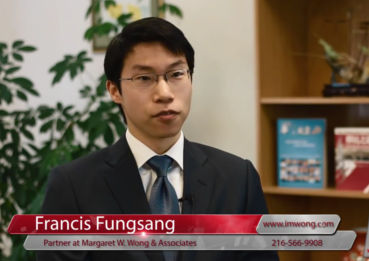
My name is Francis Fungsang, and I’m a partner at Margaret Wong & Associates. We work with companies of all sizes, from startups, to small businesses, to multinational corporations. We have assisted workers in a variety of industries, from healthcare, to information technology, to finance, to electronics. A U.S. employer can sponsor a worker for permanent residency.
The first step is called labor certification, also known as PERM. The sponsored job must be advertised in a variety of media, if no qualified US worker is found, the employer can sponsor the worker. There are a limited number of green cards issued each year, for each country, for each job category.
So depending on your job and the country you’re from, the process can take anywhere from one and a half years to more than ten years. Also, work visas often have a limited time period, so its important that workers and employers start the process as early as possible.
By: Francis Fungsang
My name is Francis Fungsang, and I’m a partner at Margaret Wong & Associates. We work with companies of all sizes, from startups, to small businesses, to multinational corporations. We have assisted workers in a variety of industries, from healthcare, to information technology, to finance, to electronics. A U.S. employer can sponsor a worker for permanent residency.
The first step is called labor certification, also known as PERM. The sponsored job must be advertised in a variety of media, if no qualified US worker is found, the employer can sponsor the worker. There are a limited number of green cards issued each year, for each country, for each job category.
So depending on your job and the country you’re from, the process can take anywhere from one and a half years to more than ten years. Also, work visas often have a limited time period, so its important that workers and employers start the process as early as possible.
By: Francis Fungsang
A lot of people see, whenever we do high profile cases, people say: “Oh, you’re just because they’re so famous. It’s easy.” or, “They’re so rich. It’s easy.” We also represented one of the richest man in Bolivia. You know the situation between Venezuela and Bolivia, the whole block of countries. We represent a lot of people from that part of the world. So it’s really fun and exciting, because when I was representing one of them, we heard the planes up there in the compound, because they all live in compounds. And I needed to get my client out of the country, and the planes were up there trying to arrest him. And I heard it, and it’s really scary. And I couldn’t be with my client, because I’m not there. And I couldn’t get into that soil, the foreign land. But these are all my cases that I really enjoyed, and it comes back and we have fun– now we can talk about it have fun with it. At that time it is scary. Or we have clients who got deported on the plane already. We have to stop the plane to get him out. Because once the plane leaves ground, you lose jurisdiction.
We recently have a client from a more communist-block country that, by the time his plane land into American soil at JFK, three officers from their country’s DC office embassy came to pick him up. And he didn’t have the American soil because he just landed from his country on land. He was picked up by them and luckily he had the smarts to pull the sleeve of the lady who works there, their air hostess, and the lady was smart enough to call the pilot, and the pilot came out and said, “What’s the problem?” So American immigration stopped him from being picked up by his own country national. By then the plane landed, and he was picked up and stopped in immigration jail. I had to fly to his jail and visit him and talk to his country embassy people who drove hours, and they were exhausted. It was midnight, and the American embassy people, to make sure he doesn’t get deported or excluded. So those are our fun cases. It’s scary at that time because, easily he could have been excluded from our soil and back to his home country. He’d probably be executed by now. So that case we won. It was really something. It was fun, yes. It’s great. It’s challenging.
By: Margaret Wong
A lot of people see, whenever we do high profile cases, people say: “Oh, you’re just because they’re so famous. It’s easy.” or, “They’re so rich. It’s easy.” We also represented one of the richest man in Bolivia. You know the situation between Venezuela and Bolivia, the whole block of countries. We represent a lot of people from that part of the world. So it’s really fun and exciting, because when I was representing one of them, we heard the planes up there in the compound, because they all live in compounds. And I needed to get my client out of the country, and the planes were up there trying to arrest him. And I heard it, and it’s really scary. And I couldn’t be with my client, because I’m not there. And I couldn’t get into that soil, the foreign land. But these are all my cases that I really enjoyed, and it comes back and we have fun– now we can talk about it have fun with it. At that time it is scary. Or we have clients who got deported on the plane already. We have to stop the plane to get him out. Because once the plane leaves ground, you lose jurisdiction.
We recently have a client from a more communist-block country that, by the time his plane land into American soil at JFK, three officers from their country’s DC office embassy came to pick him up. And he didn’t have the American soil because he just landed from his country on land. He was picked up by them and luckily he had the smarts to pull the sleeve of the lady who works there, their air hostess, and the lady was smart enough to call the pilot, and the pilot came out and said, “What’s the problem?” So American immigration stopped him from being picked up by his own country national. By then the plane landed, and he was picked up and stopped in immigration jail. I had to fly to his jail and visit him and talk to his country embassy people who drove hours, and they were exhausted. It was midnight, and the American embassy people, to make sure he doesn’t get deported or excluded. So those are our fun cases. It’s scary at that time because, easily he could have been excluded from our soil and back to his home country. He’d probably be executed by now. So that case we won. It was really something. It was fun, yes. It’s great. It’s challenging.
By: Margaret Wong
By: Margaret Wong
By: Margaret Wong
Hi, my name is Marisela Marquez. I’m an attorney with Margaret Wong & Associates. I have been practicing law for over six years. The last two have been with this firm. We are a full service immigration firm. I handle all types of immigration cases.
Most of my time is spent on removal or deportation cases. That means I represent clients who the U.S. government is actively trying to remove. For that purpose I travel all across the country and appear in all immigration courts. I also specialize in obtaining green cards for individuals with exceptional or extraordinary abilities. What makes our firm unique is that when you hire Margaret Wong & Associates to represent you, you acquire an army of eight experienced immigration attorneys and over (30) support staff that speak (15) different languages all dedicated and fighting on your behalf.
By: Marisela Marquez
Hi, my name is Marisela Marquez. I’m an attorney with Margaret Wong & Associates. I have been practicing law for over six years. The last two have been with this firm. We are a full service immigration firm. I handle all types of immigration cases.
Most of my time is spent on removal or deportation cases. That means I represent clients who the U.S. government is actively trying to remove. For that purpose I travel all across the country and appear in all immigration courts. I also specialize in obtaining green cards for individuals with exceptional or extraordinary abilities. What makes our firm unique is that when you hire Margaret Wong & Associates to represent you, you acquire an army of eight experienced immigration attorneys and over (30) support staff that speak (15) different languages all dedicated and fighting on your behalf.
By: Marisela Marquez
Hi, I’m Scott Bratton, I’m a partner at Margaret Wong & Associates. I’ve practiced immigration law for the past 13 years representing immigrants throughout the United States. I specialize in federal litigation, removal defense, and other complex issues involving immigration law. I’m the head of the Removal Defense and Litigation departments at Margaret Wong & Associates. I also teach immigration law at Cleveland State University.
I handle complicated immigration matters ranging from removal defense to federal litigation and adjustment of status and naturalization cases. Our firm represents immigrants throughout the United States in all aspects of other immigration cases. We passionately represent individuals in trying to help them obtain their dream of citizenship, non-immigrant status or lawful permanent resident status. If you have any questions, please contact me, and I’ll be happy to talk to you about your case.
By: Scott Bratton
Hi, I’m Scott Bratton, I’m a partner at Margaret Wong & Associates. I’ve practiced immigration law for the past 13 years representing immigrants throughout the United States. I specialize in federal litigation, removal defense, and other complex issues involving immigration law. I’m the head of the Removal Defense and Litigation departments at Margaret Wong & Associates. I also teach immigration law at Cleveland State University.
I handle complicated immigration matters ranging from removal defense to federal litigation and adjustment of status and naturalization cases. Our firm represents immigrants throughout the United States in all aspects of other immigration cases. We passionately represent individuals in trying to help them obtain their dream of citizenship, non-immigrant status or lawful permanent resident status. If you have any questions, please contact me, and I’ll be happy to talk to you about your case.
By: Scott Bratton
We have nationality traits. Like the Russians, the Ukrainians, they’re very different from the Philipinos because of the high and the different fraud level. The level of fraud is different. Nigerians is very different from Sudan, very different from South Africans, and it’s very different from Kenyans, Afghanistans, Pakistans. So it’s all different. Like the fall of the Shah in the 80s and 70s. A lot of Iranians come to America. So with that, we did a lot of cases. But then the Marriage Fraud Act came in in 1984, and in ’86, IRCA came in. So all these are new changes, 1990 IMMACT 90, three strikes you’re out, by President Clinton that affected. So we have a lot of new things going in the past 35 years. I’m also lucky because of the history I’ve been doing. Because once I started out in this practice, we used to have no secretary and one desk, and that’s me.
So I would run to Immigration, run back, because there’s no Xerox machine there. So I would run back to the office, make some Xerox, and run back. But now, immigration is growing. In those days, it’s a very small department of DOJ. In the olden, olden days, it’s with the Labor Department, then with DOJ. Now it’s with DHS, which is Homeland Security. So some of the interesting cases we have done? We did Tony Pena, Jose Mesa. We did a lot of great tennis players. We did a lot of high-profile. But my pride and joy is really working with the everyday cases.
Each country– in the olden days, it’s quota. It’s priority-based. Now it’s still quota and priority-based– actually, in the olden, olden days, it’s hemisphere: eastern hemisphere, western hemisphere. But in ’94, the Civil Rights Act came in. ’95, the Quota Act came in, both by President Johnson. So people like us– I came in 1969. Actually, Taiwan kids came in ’66, ’65, ’67. And then Hong Kong kids came. And then the PRC came en masse in the past three or four years, because Hillary Clinton, before she resigned or retired from the State Department, really make more tourists and students come from overseas to enjoy our education system, to enjoy our touring, because our country– one of the increasing trade from our country should be from tourism and from education – foreign students – because foreign students pay three-times the school tuition than the in-state pay. Because foreign students have a F1 level, and then the general admission, and then the in-state tuition, which is lower than the general admission in all public schools.
So in the past few years, you see a lot more different countries coming to America on F1s. But about in the ’60s and ’70s, because Nixon and Kissinger did not open up the Far East until ’72 visit, ’78 visit, so en masse, all the Chinese came after ’78. But the Koreans came a lot earlier, because of the Korean War – ’51-’53, the Korean War – so Korea and the Philippines of course. In the Second World War, Philippines is a strong ally of America. That’s why in order to be a great immigration lawyer, you really need to know the world. Read the newspapers. Know the history.
By: Margaret Wong
We have nationality traits. Like the Russians, the Ukrainians, they’re very different from the Philipinos because of the high and the different fraud level. The level of fraud is different. Nigerians is very different from Sudan, very different from South Africans, and it’s very different from Kenyans, Afghanistans, Pakistans. So it’s all different. Like the fall of the Shah in the 80s and 70s. A lot of Iranians come to America. So with that, we did a lot of cases. But then the Marriage Fraud Act came in in 1984, and in ’86, IRCA came in. So all these are new changes, 1990 IMMACT 90, three strikes you’re out, by President Clinton that affected. So we have a lot of new things going in the past 35 years. I’m also lucky because of the history I’ve been doing. Because once I started out in this practice, we used to have no secretary and one desk, and that’s me.
So I would run to Immigration, run back, because there’s no Xerox machine there. So I would run back to the office, make some Xerox, and run back. But now, immigration is growing. In those days, it’s a very small department of DOJ. In the olden, olden days, it’s with the Labor Department, then with DOJ. Now it’s with DHS, which is Homeland Security. So some of the interesting cases we have done? We did Tony Pena, Jose Mesa. We did a lot of great tennis players. We did a lot of high-profile. But my pride and joy is really working with the everyday cases.
Each country– in the olden days, it’s quota. It’s priority-based. Now it’s still quota and priority-based– actually, in the olden, olden days, it’s hemisphere: eastern hemisphere, western hemisphere. But in ’94, the Civil Rights Act came in. ’95, the Quota Act came in, both by President Johnson. So people like us– I came in 1969. Actually, Taiwan kids came in ’66, ’65, ’67. And then Hong Kong kids came. And then the PRC came en masse in the past three or four years, because Hillary Clinton, before she resigned or retired from the State Department, really make more tourists and students come from overseas to enjoy our education system, to enjoy our touring, because our country– one of the increasing trade from our country should be from tourism and from education – foreign students – because foreign students pay three-times the school tuition than the in-state pay. Because foreign students have a F1 level, and then the general admission, and then the in-state tuition, which is lower than the general admission in all public schools.
So in the past few years, you see a lot more different countries coming to America on F1s. But about in the ’60s and ’70s, because Nixon and Kissinger did not open up the Far East until ’72 visit, ’78 visit, so en masse, all the Chinese came after ’78. But the Koreans came a lot earlier, because of the Korean War – ’51-’53, the Korean War – so Korea and the Philippines of course. In the Second World War, Philippines is a strong ally of America. That’s why in order to be a great immigration lawyer, you really need to know the world. Read the newspapers. Know the history.
By: Margaret Wong