Colorado Family Law Laws

Do I Need a Divorce Attorney | Colorado

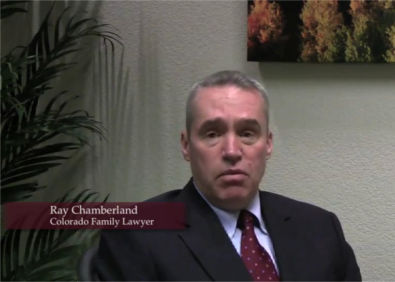
Ray Chamberland


If you’ve decided that you’re going to get divorced, the very first issue you ought to ask yourself is whether or not you need an attorney, or can you handle it yourself. If you have limited assets, you’ve been married for a very short period of time, and there is no children involved, you may be able to get a divorce without the help of an attorney.

One of the things I do when I’m talking to people, is to help them with that analysis and decide whether they even an attorney or not. The problem with doing it yourself, even under the circumstances I’ve described, is there is a great deal of paperwork, it must be completed properly, there has to be a fair exchange of financial information, and then you are going to have to make at least a couple of appearances in court.

Many people are intimidated by that, and even if they have limited assets in the divorce and it’s been a short term marriage without children, they prefer to have the help of a professional who does it every day. But that’s a decision each individual’s going to have to make.

By: Ray Chamberland

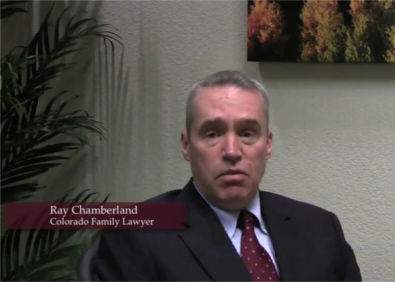
If you’ve decided that you’re going to get divorced, the very first issue you ought to ask yourself is whether or not you need an attorney, or can you handle it yourself. If you have limited assets, you’ve been married for a very short period of time, and there is no children involved, you may be able to get a divorce without the help of an attorney.

One of the things I do when I’m talking to people, is to help them with that analysis and decide whether they even an attorney or not. The problem with doing it yourself, even under the circumstances I’ve described, is there is a great deal of paperwork, it must be completed properly, there has to be a fair exchange of financial information, and then you are going to have to make at least a couple of appearances in court.

Many people are intimidated by that, and even if they have limited assets in the divorce and it’s been a short term marriage without children, they prefer to have the help of a professional who does it every day. But that’s a decision each individual’s going to have to make.

By: Ray Chamberland

Enforcing Parenting Time | Denver Child Custody

Scott Goldman


Enforcing parenting time in the state of Colorado is done through filing a motion to enforce parenting time in the proper court. A lot of times we’ll have people come to us though that have not had a parenting plan in place at all and have never been to court. So from that standpoint, the first way that you enforce parenting time or your rights is by filing the proper case, which would be an allocation of parental responsibilities or perhaps a divorce case to get that issue started.

However, if you’ve already had a parenting plan and a court order that dictates what your parenting time is, the proper way to file or to enforce your parenting time is to file a motion with the court saying that the parent has not been complying. Perhaps they didn’t give you your Christmas break or you were supposed to have parenting time for an entire weekend and they just refused to give you parenting time. In certain cases, and it’s unfortunate, child support is not being paid so that other parent sees that as a reason to take parenting time away. It’s not a reason. So at the end of the day, for those reasons and many more, we go into court and file a motion to enforce parenting time.

By: Scott Goldman

Enforcing parenting time in the state of Colorado is done through filing a motion to enforce parenting time in the proper court. A lot of times we’ll have people come to us though that have not had a parenting plan in place at all and have never been to court. So from that standpoint, the first way that you enforce parenting time or your rights is by filing the proper case, which would be an allocation of parental responsibilities or perhaps a divorce case to get that issue started.

However, if you’ve already had a parenting plan and a court order that dictates what your parenting time is, the proper way to file or to enforce your parenting time is to file a motion with the court saying that the parent has not been complying. Perhaps they didn’t give you your Christmas break or you were supposed to have parenting time for an entire weekend and they just refused to give you parenting time. In certain cases, and it’s unfortunate, child support is not being paid so that other parent sees that as a reason to take parenting time away. It’s not a reason. So at the end of the day, for those reasons and many more, we go into court and file a motion to enforce parenting time.

By: Scott Goldman

Spousal Maintenance Formula | Colorado

Leslie Matthews


What is alimony based on in Colorado? Alimony, we actually don’t use that word here in Colorado. It’s the same thing, but we use the word maintenance. The reason we use the word maintenance is because it’s need-based here in Colorado. It’s not as if you just should have maintenance/alimony because someone’s at fault or someone’s been bad and they need to be punished.

Here in Colorado, regardless of how bad the other party is, you’re not going to be able to get alimony or maintenance unless you fulfill on what we now have as a formula or such. So here in Colorado, we have a formula. It went into effect at the beginning of 2014. It is a new formula. It doesn’t go into effect unless you’ve had at least three years of marriage.  If you are under three years of marriage, then the formula doesn’t apply. You might be able to get short term, temporary maintenance/alimony to tide you over until you get a job. But the formula itself won’t come into effect unless you’ve married a relatively significant period of time – three years. Once you hit that three year mark, the formula comes into effect and, whereas historically, we used to argue about maintenance all the time, now there’s less argument about it because judges like formulas.

Formulas make things easier. The maintenance formula itself has some complexities to it that are beyond this video, however suffice it to say, a thumbnail if you wanted to use it would be that the spouse that needed maintenance would probably get 40% of the other spouse’s salary minus – I don’t know if you can stick with it – minus 50% of the salary that the spouse who has less income already makes, and then the only question at that point is the period of time that you’d get the maintenance. It’s between a third of your marriage to half of your marriage, depending on how long you’ve been married. So the longer you’ve been married, the closer you’re going to get to the halfway point for the number of years that you would get maintenance.

For instance, if you’ve been married for (20) years, you’ll probably get maintenance for (10) years. And if you are a stay at home mother, let’s say, and you haven’t worked in years and years and years and you’re in your 50s, chances are you’ll get 40% of your spouses salary for that ten years. Now you can’t– I’m not promising that’s exactly right because like I said, there are many complexities to the statute and you’d have to come in a really sit down with me and really look for me to come up with what that maintenance formula will look like. So don’t take it as gospel. I’m just saying, that’s kind of a thumbnail sketch of how we do maintenance currently here in Colorado.

By: Leslie Matthews

What is alimony based on in Colorado? Alimony, we actually don’t use that word here in Colorado. It’s the same thing, but we use the word maintenance. The reason we use the word maintenance is because it’s need-based here in Colorado. It’s not as if you just should have maintenance/alimony because someone’s at fault or someone’s been bad and they need to be punished.

Here in Colorado, regardless of how bad the other party is, you’re not going to be able to get alimony or maintenance unless you fulfill on what we now have as a formula or such. So here in Colorado, we have a formula. It went into effect at the beginning of 2014. It is a new formula. It doesn’t go into effect unless you’ve had at least three years of marriage.  If you are under three years of marriage, then the formula doesn’t apply. You might be able to get short term, temporary maintenance/alimony to tide you over until you get a job. But the formula itself won’t come into effect unless you’ve married a relatively significant period of time – three years. Once you hit that three year mark, the formula comes into effect and, whereas historically, we used to argue about maintenance all the time, now there’s less argument about it because judges like formulas.

Formulas make things easier. The maintenance formula itself has some complexities to it that are beyond this video, however suffice it to say, a thumbnail if you wanted to use it would be that the spouse that needed maintenance would probably get 40% of the other spouse’s salary minus – I don’t know if you can stick with it – minus 50% of the salary that the spouse who has less income already makes, and then the only question at that point is the period of time that you’d get the maintenance. It’s between a third of your marriage to half of your marriage, depending on how long you’ve been married. So the longer you’ve been married, the closer you’re going to get to the halfway point for the number of years that you would get maintenance.

For instance, if you’ve been married for (20) years, you’ll probably get maintenance for (10) years. And if you are a stay at home mother, let’s say, and you haven’t worked in years and years and years and you’re in your 50s, chances are you’ll get 40% of your spouses salary for that ten years. Now you can’t– I’m not promising that’s exactly right because like I said, there are many complexities to the statute and you’d have to come in a really sit down with me and really look for me to come up with what that maintenance formula will look like. So don’t take it as gospel. I’m just saying, that’s kind of a thumbnail sketch of how we do maintenance currently here in Colorado.

By: Leslie Matthews

Modifying Child Support | Denver Child Support

Scott Goldman


In the State of Colorado, child support can be modified when there’s a substantial and continuing change in circumstances. The first thing that is looked to is whether or not the amount of child support that’s currently being paid will change by greater than 10%. If somebody for example is paying $500 a month and they’re trying to reduce their child support, then their burden would be to show that the child support would go down by $50. And of course on the other hand, if the person who’s receiving child support is trying to increase the amount of child support that’s being paid at the end of the day. Then they would have to show that, that amount would go up by $50 for a $500 amount example.

As far as terminating child support, generally speaking, child support will terminate once the child turns the age of 19. However, if you have multiple children, at that time you should look at modifying your child support as well. Because once the first child turns 19, it does not automatically recalculate itself for when that particular event happens, and then base itself off of the remaining children. So you should file a motion to modify child support at that time.

Some other issues that you look at when modifying child support is the date at which child support would be modified back to. Generally speaking, child support is modified back to the date that you filed your motion to modify child support. However, if you can show that there was a mutually agreed upon exchange in parenting. Meaning, maybe you had a child for four overnights a week and now for the past year or two or whatever it is, that child has been living primarily with the other parent. You can go into the court and argue that there was a mutually agreed upon exchange. And so from the date that, that child started to live with you or the other parent, the modification should go back to that date. Which could be a lot earlier in time than the date in which you file your motion.

By: Scott Goldman

In the State of Colorado, child support can be modified when there’s a substantial and continuing change in circumstances. The first thing that is looked to is whether or not the amount of child support that’s currently being paid will change by greater than 10%. If somebody for example is paying $500 a month and they’re trying to reduce their child support, then their burden would be to show that the child support would go down by $50. And of course on the other hand, if the person who’s receiving child support is trying to increase the amount of child support that’s being paid at the end of the day. Then they would have to show that, that amount would go up by $50 for a $500 amount example.

As far as terminating child support, generally speaking, child support will terminate once the child turns the age of 19. However, if you have multiple children, at that time you should look at modifying your child support as well. Because once the first child turns 19, it does not automatically recalculate itself for when that particular event happens, and then base itself off of the remaining children. So you should file a motion to modify child support at that time.

Some other issues that you look at when modifying child support is the date at which child support would be modified back to. Generally speaking, child support is modified back to the date that you filed your motion to modify child support. However, if you can show that there was a mutually agreed upon exchange in parenting. Meaning, maybe you had a child for four overnights a week and now for the past year or two or whatever it is, that child has been living primarily with the other parent. You can go into the court and argue that there was a mutually agreed upon exchange. And so from the date that, that child started to live with you or the other parent, the modification should go back to that date. Which could be a lot earlier in time than the date in which you file your motion.

By: Scott Goldman

Divorce Case Length & Cost | Denver Family Law

Scott Goldman


One of the most difficult questions to answer for anybody is how much does a divorce cost, and then how long does it take? In the State of Colorado, there’s tons of different factors that go into a divorce. And a lot of the issue with cost is where are we going to settle and where are we going to fight? What we can never control is the fight that the other side is going to bring up. And we also can’t force the other side to settle. And if they’re not going to settle, and we have to introduce other factors into the divorce, that necessarily drives the cost up.

From that standpoint, it’s very difficult to tell somebody what their divorce will cost. As far as how long it takes, in the State of Colorado, earliest that somebody can be divorced or that two parties can be divorced is the 91st day after the respondent is served with the paperwork. Or the 91st day after both parties file together. The issue though is that courts are constantly backed up with litigants going into court and fighting about custody and things like that. Depending on the jurisdiction you’re in, your divorce could take a year and a half. It could take eight months. Count on the case taking longer than the 91st day when there are genuine fights about anything within your case.

By: Scott Goldman

One of the most difficult questions to answer for anybody is how much does a divorce cost, and then how long does it take? In the State of Colorado, there’s tons of different factors that go into a divorce. And a lot of the issue with cost is where are we going to settle and where are we going to fight? What we can never control is the fight that the other side is going to bring up. And we also can’t force the other side to settle. And if they’re not going to settle, and we have to introduce other factors into the divorce, that necessarily drives the cost up.

From that standpoint, it’s very difficult to tell somebody what their divorce will cost. As far as how long it takes, in the State of Colorado, earliest that somebody can be divorced or that two parties can be divorced is the 91st day after the respondent is served with the paperwork. Or the 91st day after both parties file together. The issue though is that courts are constantly backed up with litigants going into court and fighting about custody and things like that. Depending on the jurisdiction you’re in, your divorce could take a year and a half. It could take eight months. Count on the case taking longer than the 91st day when there are genuine fights about anything within your case.

By: Scott Goldman

Divorce Decree | Colorado

Leslie Matthews


When you get divorced, you have a number of pieces of paper that need to be sent in to the court. A divorce decree is all of that final paperwork put together that’s made an order of the court. So, that final paperwork would include your parenting plan, it would include your separation agreement, it would include any other orders of the court, and that package, all put together, is your divorce decree.

Now what you can do once you have your divorce decree is you can enforce it, so it becomes as I said an order of the court, meaning that if somebody doesn’t do what they’re supposed to do based on that paperwork, you can go to the court with a contempt motion or an order to enforce and it actually is a court order. So when you’re at the end of the divorce you have a divorce decree, you have your legal rights essentially handled.

By: Leslie Matthews

When you get divorced, you have a number of pieces of paper that need to be sent in to the court. A divorce decree is all of that final paperwork put together that’s made an order of the court. So, that final paperwork would include your parenting plan, it would include your separation agreement, it would include any other orders of the court, and that package, all put together, is your divorce decree.

Now what you can do once you have your divorce decree is you can enforce it, so it becomes as I said an order of the court, meaning that if somebody doesn’t do what they’re supposed to do based on that paperwork, you can go to the court with a contempt motion or an order to enforce and it actually is a court order. So when you’re at the end of the divorce you have a divorce decree, you have your legal rights essentially handled.

By: Leslie Matthews

The Divorce Process | Colorado

Ray Chamberland


What is divorce in Colorado? Well Colorado divorce is a process. It’s a series of steps that will help folks and their marriage. In fact, we don’t even call divorce, divorce in Colorado. We call it a dissolution of marriage. In a dissolution of marriage, what the court will do is go through five basic areas and help people get divorced.

Although at times it may not seem like it’s helpful, it’s really getting the job done for you if all the steps are followed and followed correctly. First step is to do an initial status conference, at least in El Paso County. Some of the other counties may do things slightly differently. But it’s an initial meeting with the court where deadlines are set and times are set for exchange of information and determination whether or not it’s going to need any experts in the case.

The next step would be a settlement conference. Generally, that’s if both parties have an attorney, it’s the attorneys and the parties. If only one party has an attorney, obviously there could be three of you attempting to settle, or just the two of you if you don’t have attorneys. At a settlement conference, if you can reach agreement on all issues then you can write it up, submit it to the court, and often only have to go to court maybe one more time. If you’re not successful at a settlement conference, we often have what’s called a temporary orders hearing.

At a temporary orders hearing, each side presents its case for how assets should be divided, how parenting times should be arranged if there’s kids involved, and who’s going to be paying for what debts and perhaps who’s going to be living in the marital home if there is one. That is all for temporary purposes. That lasts from the time of the temporary orders hearing up until you have a final orders hearing.

Before you can have a final orders hearing, you’d be required in most instances to have mediation. Mediation is with a paid mediator who assists the couples in trying to reach agreements. If you can reach agreement on everything or on some things, again, you write them up, submit them to the court, and those issues are resolved.

Any remaining issues, which could be all of them, go to court for a final orders hearing. That’s a fully contested hearing often where both sides take very adverse positions and eventually the judge decides all the issues. In a nutshell, that’s divorce in Colorado.

By: Ray Chamberland

What is divorce in Colorado? Well Colorado divorce is a process. It’s a series of steps that will help folks and their marriage. In fact, we don’t even call divorce, divorce in Colorado. We call it a dissolution of marriage. In a dissolution of marriage, what the court will do is go through five basic areas and help people get divorced.

Although at times it may not seem like it’s helpful, it’s really getting the job done for you if all the steps are followed and followed correctly. First step is to do an initial status conference, at least in El Paso County. Some of the other counties may do things slightly differently. But it’s an initial meeting with the court where deadlines are set and times are set for exchange of information and determination whether or not it’s going to need any experts in the case.

The next step would be a settlement conference. Generally, that’s if both parties have an attorney, it’s the attorneys and the parties. If only one party has an attorney, obviously there could be three of you attempting to settle, or just the two of you if you don’t have attorneys. At a settlement conference, if you can reach agreement on all issues then you can write it up, submit it to the court, and often only have to go to court maybe one more time. If you’re not successful at a settlement conference, we often have what’s called a temporary orders hearing.

At a temporary orders hearing, each side presents its case for how assets should be divided, how parenting times should be arranged if there’s kids involved, and who’s going to be paying for what debts and perhaps who’s going to be living in the marital home if there is one. That is all for temporary purposes. That lasts from the time of the temporary orders hearing up until you have a final orders hearing.

Before you can have a final orders hearing, you’d be required in most instances to have mediation. Mediation is with a paid mediator who assists the couples in trying to reach agreements. If you can reach agreement on everything or on some things, again, you write them up, submit them to the court, and those issues are resolved.

Any remaining issues, which could be all of them, go to court for a final orders hearing. That’s a fully contested hearing often where both sides take very adverse positions and eventually the judge decides all the issues. In a nutshell, that’s divorce in Colorado.

By: Ray Chamberland

Mediation | Denver Family Law

Scott Goldman


Mediation can often save the client money. The mediator has their hourly fee, of course the attorneys do as well. But mediation can last (4) hours, it can last (2) hours, it can last the whole day. And the nice thing about mediation is that you’re not spending time preparing witnesses, preparing trial exhibits, preparing for a trial.

Really where the bulk of the costs come in are preparing for trial. To the extent that you can settle things out in mediation. And understanding that there’s still preparation for mediation. You will save yourselves a lot of money by going through that process and coming out of it successfully.

By: Scott Goldman

Mediation can often save the client money. The mediator has their hourly fee, of course the attorneys do as well. But mediation can last (4) hours, it can last (2) hours, it can last the whole day. And the nice thing about mediation is that you’re not spending time preparing witnesses, preparing trial exhibits, preparing for a trial.

Really where the bulk of the costs come in are preparing for trial. To the extent that you can settle things out in mediation. And understanding that there’s still preparation for mediation. You will save yourselves a lot of money by going through that process and coming out of it successfully.

By: Scott Goldman

How to Receive Full Custody of Your Children - Sole Legal Custody | Denver…

Scott Goldman


Winning full custody of your child or children is a very difficult thing to do in the state of Colorado. The courts look at the issue from what’s in the best interest of the child or children. From the start, it should be in the best interest of the child or children to have both parents involved in their lives.

However, when you look at other issues that come into play– maybe one parent is moving out of the state of Colorado and can’t have a true parenting plan that wouldn’t necessarily allow them to have 50-50 parenting time. That would allow one parent, should the children remain in Colorado, to have a majority of the parenting time. But to completely eviscerate the other parent’s rights as far as parenting time is concerned really need to show the court that the other parent is an unfit parent and that they endanger the children either physically or emotionally to the point where sole custody is the only option left.

By: Scott Goldman

Winning full custody of your child or children is a very difficult thing to do in the state of Colorado. The courts look at the issue from what’s in the best interest of the child or children. From the start, it should be in the best interest of the child or children to have both parents involved in their lives.

However, when you look at other issues that come into play– maybe one parent is moving out of the state of Colorado and can’t have a true parenting plan that wouldn’t necessarily allow them to have 50-50 parenting time. That would allow one parent, should the children remain in Colorado, to have a majority of the parenting time. But to completely eviscerate the other parent’s rights as far as parenting time is concerned really need to show the court that the other parent is an unfit parent and that they endanger the children either physically or emotionally to the point where sole custody is the only option left.

By: Scott Goldman

Family Law lawyers listing in CO.
Family Law Articles

A Judge Can Order a Parent to Attend Counseling in Arizona

A Judge Orders a Parent to Attend Domestic Violence Counseling in Arizona Can a judge order a parent in a child custody…

Read More

Arizona Dissolution of Marriage

In divorce, many issues require a resolution. Those issues can be resolved either by you or by the court before you can…

Read More