Colorado Family Law Laws

Mediation | Denver Family Law

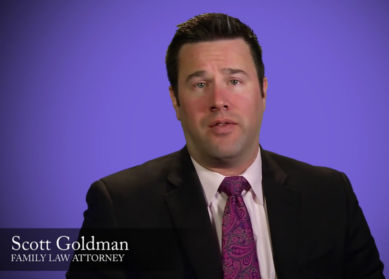
Scott Goldman


Mediation can often save the client money. The mediator has their hourly fee, of course the attorneys do as well. But mediation can last (4) hours, it can last (2) hours, it can last the whole day. And the nice thing about mediation is that you’re not spending time preparing witnesses, preparing trial exhibits, preparing for a trial.

Really where the bulk of the costs come in are preparing for trial. To the extent that you can settle things out in mediation. And understanding that there’s still preparation for mediation. You will save yourselves a lot of money by going through that process and coming out of it successfully.

By: Scott Goldman

Mediation can often save the client money. The mediator has their hourly fee, of course the attorneys do as well. But mediation can last (4) hours, it can last (2) hours, it can last the whole day. And the nice thing about mediation is that you’re not spending time preparing witnesses, preparing trial exhibits, preparing for a trial.

Really where the bulk of the costs come in are preparing for trial. To the extent that you can settle things out in mediation. And understanding that there’s still preparation for mediation. You will save yourselves a lot of money by going through that process and coming out of it successfully.

By: Scott Goldman

Moller Law Group Overview | Colorado Springs Family Law

William Moller


Bill Moller here. Owner of the Moller Law Group. I want to take a moment now, just to talk about one of the areas that we practice in here at the Moller Law Group. We specialize in family law. What is family law? Family law is a pretty broad subject area, but essentially we handle divorce, child custody situations, child support, abandonment and things like that. If you need help, come see us.

Now, when you do, know that you’re going to get honest advice and sometimes you’re going to hear things that you might not want to hear. That’s because we have experience here at the Moller Law Group because you never really know what a court will do in a situation like yours because we’ve probably encountered it before. Now, every problem is unique and everyone has a different set of challenges, but because of the experience we have, we can help you map a route for your problem.

But, you do need to understand, in a divorce or a child custody battle, not everyone’s going to get everything they want. In fact, both parents are probably going to have to sacrifice a little bit. Here at the Moller Law Group, we’re candid, we’re fair, we’re honest and we also do a good job.

By: William Moller

Bill Moller here. Owner of the Moller Law Group. I want to take a moment now, just to talk about one of the areas that we practice in here at the Moller Law Group. We specialize in family law. What is family law? Family law is a pretty broad subject area, but essentially we handle divorce, child custody situations, child support, abandonment and things like that. If you need help, come see us.

Now, when you do, know that you’re going to get honest advice and sometimes you’re going to hear things that you might not want to hear. That’s because we have experience here at the Moller Law Group because you never really know what a court will do in a situation like yours because we’ve probably encountered it before. Now, every problem is unique and everyone has a different set of challenges, but because of the experience we have, we can help you map a route for your problem.

But, you do need to understand, in a divorce or a child custody battle, not everyone’s going to get everything they want. In fact, both parents are probably going to have to sacrifice a little bit. Here at the Moller Law Group, we’re candid, we’re fair, we’re honest and we also do a good job.

By: William Moller

How is Child Custody Determined in Colorado

Leslie Matthews


What is child custody based on in Colorado? Child custody is based on a standard – a legal standard – called “What is in the best interest of the children“? And Child custody includes two pieces. It includes parenting time and it includes decision-making. And also, of course, there’s child support that needs to be dealt with. So how is that determined? Essentially, you’ll either agree to those things, in other words, you’ll have the children, let’s just say, 50% of the time – 50% of the overnights a year. Your ex-spouse will also have the children 50% of the time, or 50% of the overnights for the year.

Or certainly we have clients where they take a stand that for reasons of stability or reasons where someone has a job that requires them to travel all the time, that they have less child custody. So the parenting time might most of the time with one parent – the primary parent – and then the other parent might have every other weekend per se with the children. Child custody is either going to be determined, like I said, by you and your spouse or it’s going to be determined by the court if you can’t come to an agreement on that. The court is going to look at what’s in the best interest of the children. The court’s not – I know this is hard – but the court’s not interested at all in you or your spouse. They’re not. That’s not their charge. Their charge is what’s in the best interest of the children.

So it behooves you when you’re sitting down and maybe talking about a child custody issue in the case of a divorce, what is in the best interest of the children in terms of parenting time? What is in the best interest of the children in terms of decision-making? In other words, should decisions all be made by both of you together – joint decision making – or are there some decisions that one or the other of you should make because you can see down the line that there may be real problems associated with trying to come to agreement.

Mostly I see this in the area of wanting the children to go to therapy. One parent believes in therapy, the other parent doesn’t. Or medical issues. We’ve seen children with attention deficit syndrome. One parent believes in medication, the other parent doesn’t. So you can see down the line that there might be issues regarding decision-making.

One of the exceptions to joint decision-making that the court will impose has to do with domestic abuse. If there is domestic abuse in your relationship, then the court will not allow joint decision-making because there’s an imbalance of power between the two parties.  So you can see, there’s some complexities here. But the decision the court will make will always be based on that standard – the best interest of the children – and it will be the judge’s opinion about what’s in the best interest of the children.

So if you can’t come to an agreement, you’re essentially handing that, let’s just say subjective decision to someone else, and hopefully the judge will make a good decision on that for you if you can’t do that yourselves.

By: Leslie Matthews

What is child custody based on in Colorado? Child custody is based on a standard – a legal standard – called “What is in the best interest of the children“? And Child custody includes two pieces. It includes parenting time and it includes decision-making. And also, of course, there’s child support that needs to be dealt with. So how is that determined? Essentially, you’ll either agree to those things, in other words, you’ll have the children, let’s just say, 50% of the time – 50% of the overnights a year. Your ex-spouse will also have the children 50% of the time, or 50% of the overnights for the year.

Or certainly we have clients where they take a stand that for reasons of stability or reasons where someone has a job that requires them to travel all the time, that they have less child custody. So the parenting time might most of the time with one parent – the primary parent – and then the other parent might have every other weekend per se with the children. Child custody is either going to be determined, like I said, by you and your spouse or it’s going to be determined by the court if you can’t come to an agreement on that. The court is going to look at what’s in the best interest of the children. The court’s not – I know this is hard – but the court’s not interested at all in you or your spouse. They’re not. That’s not their charge. Their charge is what’s in the best interest of the children.

So it behooves you when you’re sitting down and maybe talking about a child custody issue in the case of a divorce, what is in the best interest of the children in terms of parenting time? What is in the best interest of the children in terms of decision-making? In other words, should decisions all be made by both of you together – joint decision making – or are there some decisions that one or the other of you should make because you can see down the line that there may be real problems associated with trying to come to agreement.

Mostly I see this in the area of wanting the children to go to therapy. One parent believes in therapy, the other parent doesn’t. Or medical issues. We’ve seen children with attention deficit syndrome. One parent believes in medication, the other parent doesn’t. So you can see down the line that there might be issues regarding decision-making.

One of the exceptions to joint decision-making that the court will impose has to do with domestic abuse. If there is domestic abuse in your relationship, then the court will not allow joint decision-making because there’s an imbalance of power between the two parties.  So you can see, there’s some complexities here. But the decision the court will make will always be based on that standard – the best interest of the children – and it will be the judge’s opinion about what’s in the best interest of the children.

So if you can’t come to an agreement, you’re essentially handing that, let’s just say subjective decision to someone else, and hopefully the judge will make a good decision on that for you if you can’t do that yourselves.

By: Leslie Matthews

The Divorce Process | Colorado

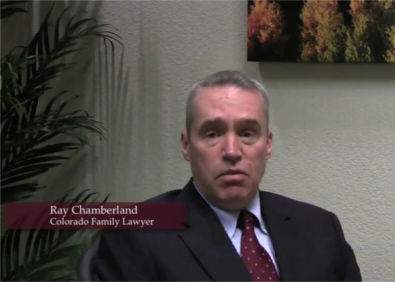
Ray Chamberland


What is divorce in Colorado? Well Colorado divorce is a process. It’s a series of steps that will help folks and their marriage. In fact, we don’t even call divorce, divorce in Colorado. We call it a dissolution of marriage. In a dissolution of marriage, what the court will do is go through five basic areas and help people get divorced.

Although at times it may not seem like it’s helpful, it’s really getting the job done for you if all the steps are followed and followed correctly. First step is to do an initial status conference, at least in El Paso County. Some of the other counties may do things slightly differently. But it’s an initial meeting with the court where deadlines are set and times are set for exchange of information and determination whether or not it’s going to need any experts in the case.

The next step would be a settlement conference. Generally, that’s if both parties have an attorney, it’s the attorneys and the parties. If only one party has an attorney, obviously there could be three of you attempting to settle, or just the two of you if you don’t have attorneys. At a settlement conference, if you can reach agreement on all issues then you can write it up, submit it to the court, and often only have to go to court maybe one more time. If you’re not successful at a settlement conference, we often have what’s called a temporary orders hearing.

At a temporary orders hearing, each side presents its case for how assets should be divided, how parenting times should be arranged if there’s kids involved, and who’s going to be paying for what debts and perhaps who’s going to be living in the marital home if there is one. That is all for temporary purposes. That lasts from the time of the temporary orders hearing up until you have a final orders hearing.

Before you can have a final orders hearing, you’d be required in most instances to have mediation. Mediation is with a paid mediator who assists the couples in trying to reach agreements. If you can reach agreement on everything or on some things, again, you write them up, submit them to the court, and those issues are resolved.

Any remaining issues, which could be all of them, go to court for a final orders hearing. That’s a fully contested hearing often where both sides take very adverse positions and eventually the judge decides all the issues. In a nutshell, that’s divorce in Colorado.

By: Ray Chamberland

What is divorce in Colorado? Well Colorado divorce is a process. It’s a series of steps that will help folks and their marriage. In fact, we don’t even call divorce, divorce in Colorado. We call it a dissolution of marriage. In a dissolution of marriage, what the court will do is go through five basic areas and help people get divorced.

Although at times it may not seem like it’s helpful, it’s really getting the job done for you if all the steps are followed and followed correctly. First step is to do an initial status conference, at least in El Paso County. Some of the other counties may do things slightly differently. But it’s an initial meeting with the court where deadlines are set and times are set for exchange of information and determination whether or not it’s going to need any experts in the case.

The next step would be a settlement conference. Generally, that’s if both parties have an attorney, it’s the attorneys and the parties. If only one party has an attorney, obviously there could be three of you attempting to settle, or just the two of you if you don’t have attorneys. At a settlement conference, if you can reach agreement on all issues then you can write it up, submit it to the court, and often only have to go to court maybe one more time. If you’re not successful at a settlement conference, we often have what’s called a temporary orders hearing.

At a temporary orders hearing, each side presents its case for how assets should be divided, how parenting times should be arranged if there’s kids involved, and who’s going to be paying for what debts and perhaps who’s going to be living in the marital home if there is one. That is all for temporary purposes. That lasts from the time of the temporary orders hearing up until you have a final orders hearing.

Before you can have a final orders hearing, you’d be required in most instances to have mediation. Mediation is with a paid mediator who assists the couples in trying to reach agreements. If you can reach agreement on everything or on some things, again, you write them up, submit them to the court, and those issues are resolved.

Any remaining issues, which could be all of them, go to court for a final orders hearing. That’s a fully contested hearing often where both sides take very adverse positions and eventually the judge decides all the issues. In a nutshell, that’s divorce in Colorado.

By: Ray Chamberland

Divorce Case Length & Cost | Denver Family Law

Scott Goldman


One of the most difficult questions to answer for anybody is how much does a divorce cost, and then how long does it take? In the State of Colorado, there’s tons of different factors that go into a divorce. And a lot of the issue with cost is where are we going to settle and where are we going to fight? What we can never control is the fight that the other side is going to bring up. And we also can’t force the other side to settle. And if they’re not going to settle, and we have to introduce other factors into the divorce, that necessarily drives the cost up.

From that standpoint, it’s very difficult to tell somebody what their divorce will cost. As far as how long it takes, in the State of Colorado, earliest that somebody can be divorced or that two parties can be divorced is the 91st day after the respondent is served with the paperwork. Or the 91st day after both parties file together. The issue though is that courts are constantly backed up with litigants going into court and fighting about custody and things like that. Depending on the jurisdiction you’re in, your divorce could take a year and a half. It could take eight months. Count on the case taking longer than the 91st day when there are genuine fights about anything within your case.

By: Scott Goldman

One of the most difficult questions to answer for anybody is how much does a divorce cost, and then how long does it take? In the State of Colorado, there’s tons of different factors that go into a divorce. And a lot of the issue with cost is where are we going to settle and where are we going to fight? What we can never control is the fight that the other side is going to bring up. And we also can’t force the other side to settle. And if they’re not going to settle, and we have to introduce other factors into the divorce, that necessarily drives the cost up.

From that standpoint, it’s very difficult to tell somebody what their divorce will cost. As far as how long it takes, in the State of Colorado, earliest that somebody can be divorced or that two parties can be divorced is the 91st day after the respondent is served with the paperwork. Or the 91st day after both parties file together. The issue though is that courts are constantly backed up with litigants going into court and fighting about custody and things like that. Depending on the jurisdiction you’re in, your divorce could take a year and a half. It could take eight months. Count on the case taking longer than the 91st day when there are genuine fights about anything within your case.

By: Scott Goldman

Effective Mediation Tips | Denver Family Law

Scott Goldman


Mediation in the State of Colorado, whether it’s for a divorce case or a child custody case is ordered by the courts, nine times out of ten. And mediation is an alternative way for the parties to resolve their case. Being in full control of that agreement and not risking whether or not a judge or magistrate would go against what you ultimately think should happen.

Mediation can be effective, but it’s only as effective as you allow it to be. And so if you’re not in mediation with realistic expectations about your case. And with the mindset that you want to settle your case, then mediation frankly will not be effective. In order for mediation to be effective, also, both parties need to want to settle the case, and want to make realistic decisions about the outcome of the case that they would also get– that they would also be likely to get in a court setting as well.

If you go in to mediation, thinking that you’re going to get $10,000 worth of alimony a month, and the facts only support of $2,000 alimony rate. Or if you think you’re going to go into mediation and get full custody when the facts support a different custody outcome. Then those are the expectations I’m talking about, that would make mediation ineffective. So it’s very important to listen to your lawyer and make decisions about a realistic outcome so that mediation can be effective. And so you can settle your case with a better piece of mind.

By: Scott Goldman

Mediation in the State of Colorado, whether it’s for a divorce case or a child custody case is ordered by the courts, nine times out of ten. And mediation is an alternative way for the parties to resolve their case. Being in full control of that agreement and not risking whether or not a judge or magistrate would go against what you ultimately think should happen.

Mediation can be effective, but it’s only as effective as you allow it to be. And so if you’re not in mediation with realistic expectations about your case. And with the mindset that you want to settle your case, then mediation frankly will not be effective. In order for mediation to be effective, also, both parties need to want to settle the case, and want to make realistic decisions about the outcome of the case that they would also get– that they would also be likely to get in a court setting as well.

If you go in to mediation, thinking that you’re going to get $10,000 worth of alimony a month, and the facts only support of $2,000 alimony rate. Or if you think you’re going to go into mediation and get full custody when the facts support a different custody outcome. Then those are the expectations I’m talking about, that would make mediation ineffective. So it’s very important to listen to your lawyer and make decisions about a realistic outcome so that mediation can be effective. And so you can settle your case with a better piece of mind.

By: Scott Goldman

Moller Law Group Philosophy | Colorado Springs Family Law

William Moller


Hi. My name is Bill Moller. I’m the owner of The Moller Law Group. And I just want to take a moment to talk to you about what our firm believes in. I’m an avid backpacker. On a sunny day, if I can get out of here, I’ll be up in the mountains hiking, usually with my dog Hover. Sometimes I take even more extended trips up in the high country.

One of the things that I always take with me is a compass. The reason I take a compass is so I can get back to where I begun. I’m kind of old school. I don’t use a GPS. But our motto here at the Moller Law Group, is to help you map a route through life’s journey. Now that may sound like a silly slogan. But it’s what we really believe.

Sometimes you have problems that you just need an attorney for. And so if you come to see us, we’re going to help you find a way through your difficulty – to the clear fields beyond. And if we can do that for you, give us a call. Thanks.

By: William Moller

Hi. My name is Bill Moller. I’m the owner of The Moller Law Group. And I just want to take a moment to talk to you about what our firm believes in. I’m an avid backpacker. On a sunny day, if I can get out of here, I’ll be up in the mountains hiking, usually with my dog Hover. Sometimes I take even more extended trips up in the high country.

One of the things that I always take with me is a compass. The reason I take a compass is so I can get back to where I begun. I’m kind of old school. I don’t use a GPS. But our motto here at the Moller Law Group, is to help you map a route through life’s journey. Now that may sound like a silly slogan. But it’s what we really believe.

Sometimes you have problems that you just need an attorney for. And so if you come to see us, we’re going to help you find a way through your difficulty – to the clear fields beyond. And if we can do that for you, give us a call. Thanks.

By: William Moller

What is a Parenting Plan | Denver Child Custody

Scott Goldman


In the state of Colorado, a parenting plan is the document that the court ultimately will make an order of the court that determines when each parent will have their parenting time, what decision making looks like, what child support looks like, whether or not one parent can take the child tax credits in one year and all sorts of things regarding the child and children.

It’s very important to have a parenting plan because when there is a breakdown in the communication between the parents in the future, they have something to rely on, they have something that they can go and enforce in the court. It also gives the children a sense of stability.

The children may not be and should not be made aware of the parenting plan, however, when the parents are not fighting over issues and rely simply on a document that either they entered into through an agreement process or by a court order then the children really have – at that point – a worry-free life until something is modified in the court and a parenting plan is very important in that respect.

By: Scott Goldman

In the state of Colorado, a parenting plan is the document that the court ultimately will make an order of the court that determines when each parent will have their parenting time, what decision making looks like, what child support looks like, whether or not one parent can take the child tax credits in one year and all sorts of things regarding the child and children.

It’s very important to have a parenting plan because when there is a breakdown in the communication between the parents in the future, they have something to rely on, they have something that they can go and enforce in the court. It also gives the children a sense of stability.

The children may not be and should not be made aware of the parenting plan, however, when the parents are not fighting over issues and rely simply on a document that either they entered into through an agreement process or by a court order then the children really have – at that point – a worry-free life until something is modified in the court and a parenting plan is very important in that respect.

By: Scott Goldman

Family Law lawyers listing in CO.
Family Law Articles

Arizona Dissolution of Marriage

In divorce, many issues require a resolution. Those issues can be resolved either by you or by the court before you can…

Read More

A Judge Can Order a Parent to Attend Counseling in Arizona

A Judge Orders a Parent to Attend Domestic Violence Counseling in Arizona Can a judge order a parent in a child custody…

Read More