New York Personal Injury Laws

Diseases Caused by Asbestos Exposure | New York City Personal Injury

Joseph Williams


Diseases Caused by Asbestos Exposure

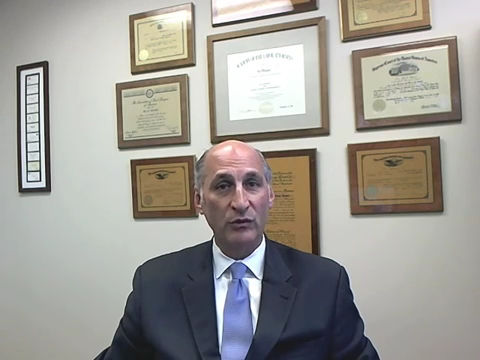
Let’s talk about some of the diseases that exposure to asbestos can cause. Hi, I’m Joe Williams. I’m a mesothelioma and asbestos attorney in New York City. I can answer some questions for you as to the asbestos related diseases that are widely accepted in the medical and scientific community. These would be broken down into two types of diseases.

Non-Cancerous Diseases

The first are what we call scarring diseases, which are not cancerous diseases. The second are malignant diseases, which are a cancer process. So the first two diseases I’ll talk to you about is asbestosis and pleural plaque. Asbestosis is a fibrotic scarring of the inside of the lungs. The doctors will call it the parenchyma or the meat of the lung. A fibrotic scarring on the inside of the lungs, which can cause a lot of disability. It’s not cancer, but it can be quite serious.

The next non-cancerous disease is known as pleural plaques. And the pleura is a sac-like lining outside the lung. So if you think of a piece of saran wrap. That’s the texture of the pleura. And the pleura can develop scarring from the asbestos fibers that a worker breathes in over the course of their life. On a CAT scan, or even sometimes on an X-ray, these show up as what’s called as pleural plaques. Again, not cancer but can be serious.

Cancerous Diseases

With respect to the cancerous diseases, there’s two that I want to focus on today. The first is lung cancer. Lung cancer is a cancerous tumor, a malignant tumor in the meat of the lungs, in the lung parenchyma. And the second cancerous diseases caused by asbestos that I want to focus on today, and it’s certainly the most important asbestos related disease because of the severity of it, is malignant mesothelioma.

Malignant mesothelioma of the pleura is a cancerous tumor that grows on that pleura surface that I described a moment ago, that saran wrap-like sac that surrounds the outside of the lung. This malignant mesothelioma tumor grows in a diffused pattern. If you think the rind of a grapefruit. Sometimes people think of a cancerous tumor as, what we call like a golf ball tumor. Malignant mesothelioma doesn’t grow in that way. It’s more of a diffused pattern, like the rind of a grapefruit, and it’s caused by exposure to asbestos.

Now I’m sure you have many other questions about the disease pattern and the diseases caused by asbestos, and we can answer those questions. I’m Joe Williams and everyday at our firm, we handle cases from mesothelioma victims and their families. And we certainly can answer your questions, and we’d be happy to do that. I hope you found this video informative, and I thank you very much for watching.

Diseases Caused by Asbestos Exposure

Let’s talk about some of the diseases that exposure to asbestos can cause. Hi, I’m Joe Williams. I’m a mesothelioma and asbestos attorney in New York City. I can answer some questions for you as to the asbestos related diseases that are widely accepted in the medical and scientific community. These would be broken down into two types of diseases.

Non-Cancerous Diseases

The first are what we call scarring diseases, which are not cancerous diseases. The second are malignant diseases, which are a cancer process. So the first two diseases I’ll talk to you about is asbestosis and pleural plaque. Asbestosis is a fibrotic scarring of the inside of the lungs. The doctors will call it the parenchyma or the meat of the lung. A fibrotic scarring on the inside of the lungs, which can cause a lot of disability. It’s not cancer, but it can be quite serious.

The next non-cancerous disease is known as pleural plaques. And the pleura is a sac-like lining outside the lung. So if you think of a piece of saran wrap. That’s the texture of the pleura. And the pleura can develop scarring from the asbestos fibers that a worker breathes in over the course of their life. On a CAT scan, or even sometimes on an X-ray, these show up as what’s called as pleural plaques. Again, not cancer but can be serious.

Cancerous Diseases

With respect to the cancerous diseases, there’s two that I want to focus on today. The first is lung cancer. Lung cancer is a cancerous tumor, a malignant tumor in the meat of the lungs, in the lung parenchyma. And the second cancerous diseases caused by asbestos that I want to focus on today, and it’s certainly the most important asbestos related disease because of the severity of it, is malignant mesothelioma.

Malignant mesothelioma of the pleura is a cancerous tumor that grows on that pleura surface that I described a moment ago, that saran wrap-like sac that surrounds the outside of the lung. This malignant mesothelioma tumor grows in a diffused pattern. If you think the rind of a grapefruit. Sometimes people think of a cancerous tumor as, what we call like a golf ball tumor. Malignant mesothelioma doesn’t grow in that way. It’s more of a diffused pattern, like the rind of a grapefruit, and it’s caused by exposure to asbestos.

Now I’m sure you have many other questions about the disease pattern and the diseases caused by asbestos, and we can answer those questions. I’m Joe Williams and everyday at our firm, we handle cases from mesothelioma victims and their families. And we certainly can answer your questions, and we’d be happy to do that. I hope you found this video informative, and I thank you very much for watching.

Jewelers Diagnosed with Mesothelioma | New York City Personal Injury

Joseph Williams


Jewelers Exposed to Asbestos

Did you know that jewelers could be exposed to asbestos from their work as a jeweler, and later in life be diagnosed with mesothelioma? Hi, I’m Joe Williams. I’m a mesothelioma trial attorney, and I want to talk to you about some of these asbestos exposures.

 When the Exposure Occurs

A jeweler would work on casting jewelry. In order to do that, they would do something called the lost wax method in which they would make a mold using wax in a container. The important part of this is that the container itself would be lined with an asbestos containing product, often an asbestos containing paper. That material would have to be cut and manipulated to get into the mold. The asbestos was used so that when the mold is put into the oven, it would stand the high heat of the oven during the molding process. The jeweler would be cutting this asbestos paper product exposing themselves to asbestos fibers and asbestos dust over the course of their career.

In addition to that, jewelers soldered jewelry. They did that on soldering boards, or pounding boards, made of an asbestos stone. The repeated use of this board made of stone over the course of time released asbestos dust that the jeweler would breath on a continual and daily basis. These exposures to asbestos can cause a jeweler to develop mesothelioma decades later, later in their life, even after their work has long stopped.

Now, I’m telling you this because you have questions about mesothelioma, and about what causes mesothelioma. I’m Joe Williams, and at my law firm we deal with these issues every day. We represent mesothelioma victims and their families each and every day. If you have questions, I invite you to contact our office, and we will answer your questions. Thank you.

Suffolk County Workers Diagnosed with Mesothelioma | New York City Personal Injury

Joseph Williams


Suffolk County Asbestos Exposure

You’ve been diagnosed with mesothelioma, you worked in Suffolk County, New York, and you’re wondering how did you get this disease.

Hi, I’m Joe Williams. I’m a mesothelioma trial attorney, and I can give you information about asbestos exposures that occurred to workers in Suffolk County.

 Where Exactly Did This Exposure Occur

Now we know that in Suffolk County, New York, there were three major powerhouses, LILCO powerhouses. It’s now National Grid, but back when the workers were exposed to asbestos, they were LILCO powerhouses. The powerhouses were located in Port Jefferson, Northport, and Shoreham, and at these powerhouses, asbestos products were used. And workers – union tradesmen who built the powerhouses, who repaired and renovated these powerhouses over time – were exposed to asbesto during the course of their work.

We also know in Suffolk County, in both Bethpage and Farmingdale, there’s Grumman Aerospace, where military planes were built for the United States government using all manner of asbestos products, from asbestos gaskets in the machining of engines, to asbestos insulation products used throughout equipment and on the planes themselves. And also, during the course of the past century as the population migrated eastward to Suffolk County, there was a housing boom in Suffolk County. Houses were constructed, apartment buildings, which required the use of building products, many of which had asbestos-containing components, which exposed the workers – the builders who built Suffolk County – to asbestos.

Now you have questions about asbestos exposure and how you could have been exposed to asbestos in Suffolk County. I’m Joe Williams, and at our firm, we answer questions for mesothelioma victims and their families every day. I invite you to give us a call, and we’ll answer your questions.

Thanks.

Railroad Passengers Injured | Ira Maurer Personal Injury

Ira Maurer


Railroad Passenger Injured

When a passenger on a railroad is injured, you need an attorney that can process and can anticipate what the railroad’s going to do to defend itself. When I handle your case, I have your best interest in mind and work with you to understand the process.

Railroad Passenger Injured

When a passenger on a railroad is injured, you need an attorney that can process and can anticipate what the railroad’s going to do to defend itself. When I handle your case, I have your best interest in mind and work with you to understand the process.

Public Service Law Tip #3 | Yonkers Personal Injury

Ira Maurer


No-Fault Law Public Service Tip

I’m Ira Maurer with a public service law tip on the No-Fault Law in New York.

What is the No-Fault Law and why does it exist? Several decades back, our court systems were overwhelmed with too many claims, and the only way they could free up the logjam was to limit which cases could be brought in our court system. You must have a serious injury as defined by the No-Fault Law in order to pursue a lawsuit in New York, or your case will in fact be dismissed before trial on motion by the defendant.

Secondly, what benefits are you entitled to under No-Fault? Regardless of who is to blame, you’re entitled to receive wage benefits and have your medical treatment paid for. In New York, every insurance policy must have $50,000 first-party benefit available, payable over a period of 36 months. You are entitled to receive wage benefits not exceeding $2000 a month. You can get 80% of your wage loss, but it won’t exceed $2000 a month.

Second of all, your medical treatment has to be paid for. You don’t have to obtain preauthorization from your own No-Fault insurance company. They must pay reasonable and customary charges for your treatment. If they think you don’t need the treatment, they’ll send you for an independent medical exam to have a doctor cut off your benefits. But initially, they don’t have a right to decide whether or not you’re entitled to the care, and they don’t get to preauthorize anything.

That’s different from your own healthcare insurance, which may require pre-certification for an MRI, for example. So, No-Fault means your own insurance pays those benefits for wage loss and medical treatment. It doesn’t matter who is to blame. Your own insurance pays for it. And, you can purchase additional insurance beyond the $50,000 in first-party benefits when you purchase your policy. That’s something you should speak to your insurance agent about.

For more information about pursuing a claim under the No-Fault Law for personal injury from a car accident, visit the Maurer Law webpage at maurerlaw.net.

Plasterers Diagnosed with Mesothelioma | New York City Personal Injury

Joseph Williams


Plasterers Exposed to Asbestos

You spent a career as a plasterer. Now you’ve been diagnosed with Mesothelioma and you’re wondering how it is that you got this terrible disease.

Hi, I’m Joe Williams. I’m a Mesothelioma trial attorney in New York City, and I certainly can answer these questions for you.

How Plasterers Became Exposed to Asbestos

We know that plasterers dealt with plaster every day of their working career. And back in the ‘50s and ‘60s and before that time interior structural walls in commercial building, and in residential as well, were made with plaster. And that means, as you know, that wire lath was installed within the wall and the plaster was a dry mixed product, mixed with water and applied to the lath and allowed to dry, then sanded down. And the amount of dust created from that sanding was tremendous in the workspace of every worker on that job site. And we know that many of these plaster products back in that timeframe contained asbestos.

Sometime in the ‘60s some of the building materials changed and we went from plaster walls to sheetrock walls. And that’s of course what’s in use today. The sheetrock nailed or screwed—used to be nailed, now they’re screwed to the studs, and they used to be wood studs now they’re mostly metal studs, between the seams of the sheetrock a product called joint compound was used to seal and smooth the walls in those areas. And also for all of the nail or screw holes where the sheetrock was attacked to the studs. And the joint compound on large construction sites was usually a dry product that was mixed with water and applied to the seams of the sheetrock and to the screw or nail holes. Additionally, that joint compound came in a premixed compound which was in a bucket or a can and it was already wet and it was applied to the wall in the same way on the seams of the sheetrock or on the screw or nail holes. And whether it started wet or dry, eventually it was made wet and put on the walls and allowed to dry. And once it dried it had to be sanded smooth. And multiple coats of this process was done and sanded down, all creating a lot of asbestos dust that plasterers and workers breathed.

So these are many of the ways that a plasterer would have been exposed to asbestos dust on a work site. Now, I’m sure you have many other questions about your work and how it could have caused you to be exposed to asbestos. Well, we have the answers. I’m Joe Williams. I invite you to call my office at the number below and we can discuss your case and the way you were exposed to asbestos.

We handle Mesothelioma cases every day. We represent the victims of asbestos exposure each and every day and we’ll be happy to answer your questions. Thank you.

Latency Period Till Mesothelioma Diagnosis | New York City Personal Injury

Joseph Williams


Asbestos Exposure to Mesothelioma Diagnosis

How long does it take to get mesothelioma from exposure to asbestos? Hi. I’m Joe Williams. I’m a mesothelioma trial attorney in New York City. And to answer this question, we have to talk about the concept that doctors and scientist refer to as latency.

What latency basically means is the time from exposure to a known carcinogen, to the time when that patient is diagnosed with cancer. And to illustrate the point, I want to give you an example. Let’s say that I have a cough, and I cough into my hand.

I now have those germs on my hand. I then go and I meet you socially and say, “Hi, how are you? I’m Joe Williams. Nice to meet you.” And we shake hands. I then transfer, unfortunately for you, those germs to your hand.

You then wipe your face or your mouth, and the germs go into your system. Well, not surprisingly, three days later you start coughing. That cough, that cold, had a three day latency period. It’s very similar when we talk about mesothelioma.

The difference is the time frames involved. And it’s widely accepted by doctors and scientist throughout the world, that there is a very significant latency period for mesothelioma. From the time of exposure, perhaps a powerhouse worker working in a powerhouse in the ’50s.

Or a machinist mate on a aircraft carrier in the US navy in World War 2, could today be diagnosed with mesothelioma. The latency period, again widely accepted by the entire medical community, could be that long.

Anywhere from 20 years, 15 years, all the way up to 60 or more years, from the time of that exposure to asbestos to the time when that diagnoses of mesothelioma is made. Why is that important? It’s important because the nature of this disease requires us to journey back, and evaluate those exposures that occurred decades, sometimes many decades ago.

And it’s important to be able to take a thorough occupational history, to figure out all the possible exposures to asbestos for a mesothelioma victim. Now, you may have many more questions about latency as it relates to mesothelioma, and I can provide the answers.

I’m Joe Williams, and in our firm we deal with these issues every day. We represent victims of mesothelioma every day, and we can answer your questions, and we’ll be happy to do that. So look at the number below and call our office, and we’ll answer your questions. Thank you very much for watching. I hope this was informative.

Asbestos Exposure to Mesothelioma Diagnosis

How long does it take to get mesothelioma from exposure to asbestos? Hi. I’m Joe Williams. I’m a mesothelioma trial attorney in New York City. And to answer this question, we have to talk about the concept that doctors and scientist refer to as latency.

What latency basically means is the time from exposure to a known carcinogen, to the time when that patient is diagnosed with cancer. And to illustrate the point, I want to give you an example. Let’s say that I have a cough, and I cough into my hand.

I now have those germs on my hand. I then go and I meet you socially and say, “Hi, how are you? I’m Joe Williams. Nice to meet you.” And we shake hands. I then transfer, unfortunately for you, those germs to your hand.

You then wipe your face or your mouth, and the germs go into your system. Well, not surprisingly, three days later you start coughing. That cough, that cold, had a three day latency period. It’s very similar when we talk about mesothelioma.

The difference is the time frames involved. And it’s widely accepted by doctors and scientist throughout the world, that there is a very significant latency period for mesothelioma. From the time of exposure, perhaps a powerhouse worker working in a powerhouse in the ’50s.

Or a machinist mate on a aircraft carrier in the US navy in World War 2, could today be diagnosed with mesothelioma. The latency period, again widely accepted by the entire medical community, could be that long.

Anywhere from 20 years, 15 years, all the way up to 60 or more years, from the time of that exposure to asbestos to the time when that diagnoses of mesothelioma is made. Why is that important? It’s important because the nature of this disease requires us to journey back, and evaluate those exposures that occurred decades, sometimes many decades ago.

And it’s important to be able to take a thorough occupational history, to figure out all the possible exposures to asbestos for a mesothelioma victim. Now, you may have many more questions about latency as it relates to mesothelioma, and I can provide the answers.

I’m Joe Williams, and in our firm we deal with these issues every day. We represent victims of mesothelioma every day, and we can answer your questions, and we’ll be happy to do that. So look at the number below and call our office, and we’ll answer your questions. Thank you very much for watching. I hope this was informative.

Risk & Litigation Involving Transvaginal Mesh | Sayville

Steven Gacovino


Cases Involving Transvaginal Mesh

When you go to a doctor, you usually assume the solutions they recommend won’t hurt you, and if there are risks you expect them to tell you so. But no matter how well-intentioned medical professionals are, the safety of their recommendations depends on the source of their information. Consider cases involving the transvaginal mesh patch.

When this medical implant came on the market it was celebrated as a solution to pelvic organ prolapse and stress urinary incontinence in women. As with all such products, much of the marketing targeted doctors. Manufacturers showed the research they conducted and recommended this new device as a quality solution for the doctors’ patients. Doctors studied the information they were given and did their best to understand the risks and benefits, but when a device is first put on the market little is actually known about it. Going off of what information they’ve been given, doctors concluded whether they believe this product would be good for their patients.

What Manufactures Do Not Tell Consumers

Manufacturers of such products are expected to disclose the related risks, but sometimes manufacturers haven’t conducted enough research to know all the risks and other times they simply hide some of what they do know leaving doctors and patients with only part of the story. The transvaginal mesh patch turned out to be a product with many problems. Six women have already taken these companies to court and the juries have found in favor of the women.

In fact, juries have been so disgusted that they have ordered these big corporations to pay penalties. Because of this implant women have suffered the following problems: mesh erosion; when the mesh erodes and protrudes through the vaginal wall, organ perforation; when the mesh erodes and cuts other organs such as the bladder, extreme pain, POP or SCOI recurrence, urinary problems, scarring of the vagina, infection, bleeding, nerve damage, and pain associated with sex. Many women have undergone multiple surgeries, sometimes more than a dozen follow-up surgeries because of the pain and damage caused by the implants.

Endo & Ethicon Litigation

One manufacturer, Endo, has already begun the settlement process with many thousands of patients. Another manufacturer, Ethicon, has already settled a case of their own. All cases like this have a limited timeline for filing complaints so victims can be compensated. We don’t know the exact timeline, but with Endo wrapping things up with victims of their implant we can only recommend that you move quickly to ensure that your case is positioned for the best possible result. We know this is a personal topic and can be difficult to talk about.

If you’ve been injured by the transvaginal mesh patch, we invite you to call us. Our team is here for you. We do care about you and we want to help you determine whether you can be compensated for your losses, and you don’t need to worry about any fees. If we take a case on your behalf we will only get paid if and when you do. Call today for a free consultation at 888-LAW-8500. That’s 888-529-8500.

By: Steven Gacovino

Insurance Attorney | Yonkers Personal Injury

Ira Maurer


No-Fault Law

If you’ve been injured in an auto accident in New York, you need to know that under the no-fault law, there are reporting requirements that are essential to your claim being paid. First, you should know under the no-fault law, your own insurance company is going to be paying the bills for your treatment and your wage loss, not the other car’s insurance company. You need to report the accident promptly and your doctors who treat you have to submit their bills in a timely manner; otherwise, those bills won’t be paid. I can help you with your insurance questions when you’re involved in a car accident.

Personal Injury lawyers listing in .