Colorado Divorce Laws

What Are The Responsibilities of a Mediator | Denver Family Law

Scott Goldman


Mediators do not tell people their legal rights, that’s why you have your legal representative, your lawyer, there with you to tell you what your legal rights are. A mediator hopefully has experience in the area of law that you’re mediating. Here obviously we’re talking about family law issues.

But sometimes the mediator doesn’t have that experience at all, and they’re there to facilitate a settlement. So to that extent the mediator not only is barred from telling you what your legal rights. But they also cannot be called in to court at a later date to talk about what the settlement discussions were about. That’s barred not only by Colorado statute, but by the Colorado “Rules of Evidence” as well.

By: Scott Goldman

Mediators do not tell people their legal rights, that’s why you have your legal representative, your lawyer, there with you to tell you what your legal rights are. A mediator hopefully has experience in the area of law that you’re mediating. Here obviously we’re talking about family law issues.

But sometimes the mediator doesn’t have that experience at all, and they’re there to facilitate a settlement. So to that extent the mediator not only is barred from telling you what your legal rights. But they also cannot be called in to court at a later date to talk about what the settlement discussions were about. That’s barred not only by Colorado statute, but by the Colorado “Rules of Evidence” as well.

By: Scott Goldman

How Filing for Divorce Can Effect Your Mediation | Denver Family Law

Scott Goldman


Some people ask us whether or not you need to file for divorce before going to mediation. The truth of the matter is that you’re actually better off filing for divorce before you go to mediation even though there is no requirement that you do so.

Once you file for the divorce, there’s a whole bunch of requirements that are put in place in terms of exchanging financial documents so you should know exactly what it is you’re settling on. If that’s the goal of mediation, to settle on your case, then you need to be fully informed of the issues before you. You may not otherwise have the proper documentation before filing for divorce because there’s nothing in place that requires the other party to make disclosures to you about what you are trying to mediate.

While you don’t need to mediate prior to filing for divorce, it’s a good idea that you file for divorce and then go to mediation so you can ensure that you’re given the proper documentation and education on what it is you’re trying to settle.

By: Scott Goldman

Some people ask us whether or not you need to file for divorce before going to mediation. The truth of the matter is that you’re actually better off filing for divorce before you go to mediation even though there is no requirement that you do so.

Once you file for the divorce, there’s a whole bunch of requirements that are put in place in terms of exchanging financial documents so you should know exactly what it is you’re settling on. If that’s the goal of mediation, to settle on your case, then you need to be fully informed of the issues before you. You may not otherwise have the proper documentation before filing for divorce because there’s nothing in place that requires the other party to make disclosures to you about what you are trying to mediate.

While you don’t need to mediate prior to filing for divorce, it’s a good idea that you file for divorce and then go to mediation so you can ensure that you’re given the proper documentation and education on what it is you’re trying to settle.

By: Scott Goldman

Uncontested Divorce | Colorado

Leslie Matthews


An uncontested divorce is the best kind of divorce, to be honest with you. It means that there’s nothing that you’re fighting over, that you have to court for, and have a judge make a determination on. In other words, you’ve gone through your divorce process, but you and your spouse have been able to reach agreement on all of the important factors in your divorce. That includes your parenting plan, all of the issues surrounding how you’re going to deal with the children, all of the issues surrounding child support, maintenance, if that’s important in the case. And you’re able then to go to court with your final agreements and the judge essentially is going to just agree to what you’ve agreed to, unless there is something completely onerous or wrong with it.

In most cases, the judge will rubber stamp what you’ve agreed to. You may or may not have to go in and see the judge for a final hearing, that depends on whether or not you have attorneys, and whether there are child issues involved. But in most cases you’ll be able to avoid going to court altogether and your divorce agreement will become an order of the court just as written. And that would be an uncontested divorce. A contested divorce means that there’s something that you’re going to have to have the judge decide, and you’re going to have to go to court to have the judge decide that. And that the distinction between the two.

By: Leslie Matthews

An uncontested divorce is the best kind of divorce, to be honest with you. It means that there’s nothing that you’re fighting over, that you have to court for, and have a judge make a determination on. In other words, you’ve gone through your divorce process, but you and your spouse have been able to reach agreement on all of the important factors in your divorce. That includes your parenting plan, all of the issues surrounding how you’re going to deal with the children, all of the issues surrounding child support, maintenance, if that’s important in the case. And you’re able then to go to court with your final agreements and the judge essentially is going to just agree to what you’ve agreed to, unless there is something completely onerous or wrong with it.

In most cases, the judge will rubber stamp what you’ve agreed to. You may or may not have to go in and see the judge for a final hearing, that depends on whether or not you have attorneys, and whether there are child issues involved. But in most cases you’ll be able to avoid going to court altogether and your divorce agreement will become an order of the court just as written. And that would be an uncontested divorce. A contested divorce means that there’s something that you’re going to have to have the judge decide, and you’re going to have to go to court to have the judge decide that. And that the distinction between the two.

By: Leslie Matthews

The Mediation Process | Colorado

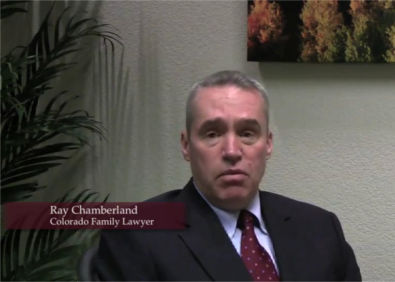
Ray Chamberland


In El Paso County following a temporary orders hearing, and before you can have a permanent orders hearing, you’re required to have mediation. We do have an Office of Dispute Resolution who provides mediation services for the county, and you’re entitled to use them for your mediation, or you can hire a private mediator. If you have an attorney it will be their decision as to whether or not you use private mediation or you use the county folks.

A mediator is a paid individual, typically an attorney who’s very familiar, in our case with family law, and they would try to assist you. If you’re using an Office of Dispute Resolution for example, they have a two-hour mediation where you each pay a fixed fee for the two hours, and you and your attorney would be in one room, the other party and their attorney if they have one, would be in the other room and the mediator would sort of do shuttle diplomacy going back and forth between the two, trying to resolve any remaining case issues that have not been settled so far.

If you can reach a mediation, a mediated agreement, you can write it up, file it with the court and you may not even have to go to court after that for a final orders hearing. So mediation can be a powerful tool to help you resolve remaining issues in divorce cases.

By: Ray Chamberland

In El Paso County following a temporary orders hearing, and before you can have a permanent orders hearing, you’re required to have mediation. We do have an Office of Dispute Resolution who provides mediation services for the county, and you’re entitled to use them for your mediation, or you can hire a private mediator. If you have an attorney it will be their decision as to whether or not you use private mediation or you use the county folks.

A mediator is a paid individual, typically an attorney who’s very familiar, in our case with family law, and they would try to assist you. If you’re using an Office of Dispute Resolution for example, they have a two-hour mediation where you each pay a fixed fee for the two hours, and you and your attorney would be in one room, the other party and their attorney if they have one, would be in the other room and the mediator would sort of do shuttle diplomacy going back and forth between the two, trying to resolve any remaining case issues that have not been settled so far.

If you can reach a mediation, a mediated agreement, you can write it up, file it with the court and you may not even have to go to court after that for a final orders hearing. So mediation can be a powerful tool to help you resolve remaining issues in divorce cases.

By: Ray Chamberland

12
Family Law lawyers listing in CO.
Family Law Articles

Arizona Dissolution of Marriage

In divorce, many issues require a resolution. Those issues can be resolved either by you or by the court before you can…

Read More

A Judge Can Order a Parent to Attend Counseling in Arizona

A Judge Orders a Parent to Attend Domestic Violence Counseling in Arizona Can a judge order a parent in a child custody…

Read More