Colorado Family Law Laws

William Moller - Profile Video | Colorado Springs Divorce Attorney

William Moller


Hi, Bill Moller, owner of the Moller Law Group. I want to take just a moment to introduce myself and talk briefly about our law firm here. I’m a retired Army officer. I spent (21) years leading soldiers. I know what it takes to lead from the front. I know what it means to take a stand on a tough position, and I know what it means to be honorable and to have integrity. I think my Army experience has prepared me well to be an attorney. I’m not intimidated easily by others, and I know how to take a stand when others think that it might be easier to give way. At the same time, I’m not a bull dog. What do I mean by that? I don’t senselessly grab hold of an issue and just fight or gnaw on it for no purpose or to no end. I take a more pragmatic approach. I analyze your case. I weigh the pros and cons of it, and I try to give you the best advice I can, telling you the strengths of your case as well as the weaknesses. If your case is weak, I’m going to tell you. If it’s strong, I’ll tell you that as well. When you come see us, you’re going to know what we think the likely outcome is going to be.

The other attorneys here in our office are the same way. We don’t needlessly fight over issues, because ultimately it’s you paying the bill. What we do try to do, though, is represent your interests and obtain the results you want. After all, this is your case, so we want you involved every step of the way so we can help you make key decisions that will get the outcome you’re really searching for.

By: William Moller

Hi, Bill Moller, owner of the Moller Law Group. I want to take just a moment to introduce myself and talk briefly about our law firm here. I’m a retired Army officer. I spent (21) years leading soldiers. I know what it takes to lead from the front. I know what it means to take a stand on a tough position, and I know what it means to be honorable and to have integrity. I think my Army experience has prepared me well to be an attorney. I’m not intimidated easily by others, and I know how to take a stand when others think that it might be easier to give way. At the same time, I’m not a bull dog. What do I mean by that? I don’t senselessly grab hold of an issue and just fight or gnaw on it for no purpose or to no end. I take a more pragmatic approach. I analyze your case. I weigh the pros and cons of it, and I try to give you the best advice I can, telling you the strengths of your case as well as the weaknesses. If your case is weak, I’m going to tell you. If it’s strong, I’ll tell you that as well. When you come see us, you’re going to know what we think the likely outcome is going to be.

The other attorneys here in our office are the same way. We don’t needlessly fight over issues, because ultimately it’s you paying the bill. What we do try to do, though, is represent your interests and obtain the results you want. After all, this is your case, so we want you involved every step of the way so we can help you make key decisions that will get the outcome you’re really searching for.

By: William Moller

Parenting Plans | Colorado Child Custody

Ray Chamberland


When I’m working with people on developing parenting plans, what we do is sit down together, you and I, and we work out what is the plan that serves you the best. Now we will have to try to convince the court that that’s in the best interest of the children, but you and I would sit down together and figure out a plan that you think serves your children’s best interest and that’s what we propose to the court. And we would propose that during settlement conferences, we’d propose that during mediation sessions, if we had temporary orders hearing that would be the plan, and that’s the plan we put forth at final orders.

Now oftentimes when we’re working on these plans, if we set a temporary plan we recognize somewhere along the way it just didn’t work, it’s not best for the kids. They’re not happy, their schoolwork is suffering, and we need to do something different. And sometimes that means the children are with you more often, sometimes it means we have to consider whether the other parent should have more time. But the complexities of that are the reason that I often suggest to folks, When you’re dealing with issues involving children and parenting you need professionals to help you.

By: Ray Chamberland

When I’m working with people on developing parenting plans, what we do is sit down together, you and I, and we work out what is the plan that serves you the best. Now we will have to try to convince the court that that’s in the best interest of the children, but you and I would sit down together and figure out a plan that you think serves your children’s best interest and that’s what we propose to the court. And we would propose that during settlement conferences, we’d propose that during mediation sessions, if we had temporary orders hearing that would be the plan, and that’s the plan we put forth at final orders.

Now oftentimes when we’re working on these plans, if we set a temporary plan we recognize somewhere along the way it just didn’t work, it’s not best for the kids. They’re not happy, their schoolwork is suffering, and we need to do something different. And sometimes that means the children are with you more often, sometimes it means we have to consider whether the other parent should have more time. But the complexities of that are the reason that I often suggest to folks, When you’re dealing with issues involving children and parenting you need professionals to help you.

By: Ray Chamberland

Modifying Child Support | Denver Child Support

Scott Goldman


In the State of Colorado, child support can be modified when there’s a substantial and continuing change in circumstances. The first thing that is looked to is whether or not the amount of child support that’s currently being paid will change by greater than 10%. If somebody for example is paying $500 a month and they’re trying to reduce their child support, then their burden would be to show that the child support would go down by $50. And of course on the other hand, if the person who’s receiving child support is trying to increase the amount of child support that’s being paid at the end of the day. Then they would have to show that, that amount would go up by $50 for a $500 amount example.

As far as terminating child support, generally speaking, child support will terminate once the child turns the age of 19. However, if you have multiple children, at that time you should look at modifying your child support as well. Because once the first child turns 19, it does not automatically recalculate itself for when that particular event happens, and then base itself off of the remaining children. So you should file a motion to modify child support at that time.

Some other issues that you look at when modifying child support is the date at which child support would be modified back to. Generally speaking, child support is modified back to the date that you filed your motion to modify child support. However, if you can show that there was a mutually agreed upon exchange in parenting. Meaning, maybe you had a child for four overnights a week and now for the past year or two or whatever it is, that child has been living primarily with the other parent. You can go into the court and argue that there was a mutually agreed upon exchange. And so from the date that, that child started to live with you or the other parent, the modification should go back to that date. Which could be a lot earlier in time than the date in which you file your motion.

By: Scott Goldman

In the State of Colorado, child support can be modified when there’s a substantial and continuing change in circumstances. The first thing that is looked to is whether or not the amount of child support that’s currently being paid will change by greater than 10%. If somebody for example is paying $500 a month and they’re trying to reduce their child support, then their burden would be to show that the child support would go down by $50. And of course on the other hand, if the person who’s receiving child support is trying to increase the amount of child support that’s being paid at the end of the day. Then they would have to show that, that amount would go up by $50 for a $500 amount example.

As far as terminating child support, generally speaking, child support will terminate once the child turns the age of 19. However, if you have multiple children, at that time you should look at modifying your child support as well. Because once the first child turns 19, it does not automatically recalculate itself for when that particular event happens, and then base itself off of the remaining children. So you should file a motion to modify child support at that time.

Some other issues that you look at when modifying child support is the date at which child support would be modified back to. Generally speaking, child support is modified back to the date that you filed your motion to modify child support. However, if you can show that there was a mutually agreed upon exchange in parenting. Meaning, maybe you had a child for four overnights a week and now for the past year or two or whatever it is, that child has been living primarily with the other parent. You can go into the court and argue that there was a mutually agreed upon exchange. And so from the date that, that child started to live with you or the other parent, the modification should go back to that date. Which could be a lot earlier in time than the date in which you file your motion.

By: Scott Goldman

Enforcing Parenting Time | Denver Child Custody

Scott Goldman


Enforcing parenting time in the state of Colorado is done through filing a motion to enforce parenting time in the proper court. A lot of times we’ll have people come to us though that have not had a parenting plan in place at all and have never been to court. So from that standpoint, the first way that you enforce parenting time or your rights is by filing the proper case, which would be an allocation of parental responsibilities or perhaps a divorce case to get that issue started.

However, if you’ve already had a parenting plan and a court order that dictates what your parenting time is, the proper way to file or to enforce your parenting time is to file a motion with the court saying that the parent has not been complying. Perhaps they didn’t give you your Christmas break or you were supposed to have parenting time for an entire weekend and they just refused to give you parenting time. In certain cases, and it’s unfortunate, child support is not being paid so that other parent sees that as a reason to take parenting time away. It’s not a reason. So at the end of the day, for those reasons and many more, we go into court and file a motion to enforce parenting time.

By: Scott Goldman

Enforcing parenting time in the state of Colorado is done through filing a motion to enforce parenting time in the proper court. A lot of times we’ll have people come to us though that have not had a parenting plan in place at all and have never been to court. So from that standpoint, the first way that you enforce parenting time or your rights is by filing the proper case, which would be an allocation of parental responsibilities or perhaps a divorce case to get that issue started.

However, if you’ve already had a parenting plan and a court order that dictates what your parenting time is, the proper way to file or to enforce your parenting time is to file a motion with the court saying that the parent has not been complying. Perhaps they didn’t give you your Christmas break or you were supposed to have parenting time for an entire weekend and they just refused to give you parenting time. In certain cases, and it’s unfortunate, child support is not being paid so that other parent sees that as a reason to take parenting time away. It’s not a reason. So at the end of the day, for those reasons and many more, we go into court and file a motion to enforce parenting time.

By: Scott Goldman

Effective Mediation Tips | Denver Family Law

Scott Goldman


Mediation in the State of Colorado, whether it’s for a divorce case or a child custody case is ordered by the courts, nine times out of ten. And mediation is an alternative way for the parties to resolve their case. Being in full control of that agreement and not risking whether or not a judge or magistrate would go against what you ultimately think should happen.

Mediation can be effective, but it’s only as effective as you allow it to be. And so if you’re not in mediation with realistic expectations about your case. And with the mindset that you want to settle your case, then mediation frankly will not be effective. In order for mediation to be effective, also, both parties need to want to settle the case, and want to make realistic decisions about the outcome of the case that they would also get– that they would also be likely to get in a court setting as well.

If you go in to mediation, thinking that you’re going to get $10,000 worth of alimony a month, and the facts only support of $2,000 alimony rate. Or if you think you’re going to go into mediation and get full custody when the facts support a different custody outcome. Then those are the expectations I’m talking about, that would make mediation ineffective. So it’s very important to listen to your lawyer and make decisions about a realistic outcome so that mediation can be effective. And so you can settle your case with a better piece of mind.

By: Scott Goldman

Mediation in the State of Colorado, whether it’s for a divorce case or a child custody case is ordered by the courts, nine times out of ten. And mediation is an alternative way for the parties to resolve their case. Being in full control of that agreement and not risking whether or not a judge or magistrate would go against what you ultimately think should happen.

Mediation can be effective, but it’s only as effective as you allow it to be. And so if you’re not in mediation with realistic expectations about your case. And with the mindset that you want to settle your case, then mediation frankly will not be effective. In order for mediation to be effective, also, both parties need to want to settle the case, and want to make realistic decisions about the outcome of the case that they would also get– that they would also be likely to get in a court setting as well.

If you go in to mediation, thinking that you’re going to get $10,000 worth of alimony a month, and the facts only support of $2,000 alimony rate. Or if you think you’re going to go into mediation and get full custody when the facts support a different custody outcome. Then those are the expectations I’m talking about, that would make mediation ineffective. So it’s very important to listen to your lawyer and make decisions about a realistic outcome so that mediation can be effective. And so you can settle your case with a better piece of mind.

By: Scott Goldman

Moller Law Group Overview | Colorado Springs Family Law

William Moller


Bill Moller here. Owner of the Moller Law Group. I want to take a moment now, just to talk about one of the areas that we practice in here at the Moller Law Group. We specialize in family law. What is family law? Family law is a pretty broad subject area, but essentially we handle divorce, child custody situations, child support, abandonment and things like that. If you need help, come see us.

Now, when you do, know that you’re going to get honest advice and sometimes you’re going to hear things that you might not want to hear. That’s because we have experience here at the Moller Law Group because you never really know what a court will do in a situation like yours because we’ve probably encountered it before. Now, every problem is unique and everyone has a different set of challenges, but because of the experience we have, we can help you map a route for your problem.

But, you do need to understand, in a divorce or a child custody battle, not everyone’s going to get everything they want. In fact, both parents are probably going to have to sacrifice a little bit. Here at the Moller Law Group, we’re candid, we’re fair, we’re honest and we also do a good job.

By: William Moller

Bill Moller here. Owner of the Moller Law Group. I want to take a moment now, just to talk about one of the areas that we practice in here at the Moller Law Group. We specialize in family law. What is family law? Family law is a pretty broad subject area, but essentially we handle divorce, child custody situations, child support, abandonment and things like that. If you need help, come see us.

Now, when you do, know that you’re going to get honest advice and sometimes you’re going to hear things that you might not want to hear. That’s because we have experience here at the Moller Law Group because you never really know what a court will do in a situation like yours because we’ve probably encountered it before. Now, every problem is unique and everyone has a different set of challenges, but because of the experience we have, we can help you map a route for your problem.

But, you do need to understand, in a divorce or a child custody battle, not everyone’s going to get everything they want. In fact, both parents are probably going to have to sacrifice a little bit. Here at the Moller Law Group, we’re candid, we’re fair, we’re honest and we also do a good job.

By: William Moller

Divorce Decree | Colorado

Leslie Matthews


When you get divorced, you have a number of pieces of paper that need to be sent in to the court. A divorce decree is all of that final paperwork put together that’s made an order of the court. So, that final paperwork would include your parenting plan, it would include your separation agreement, it would include any other orders of the court, and that package, all put together, is your divorce decree.

Now what you can do once you have your divorce decree is you can enforce it, so it becomes as I said an order of the court, meaning that if somebody doesn’t do what they’re supposed to do based on that paperwork, you can go to the court with a contempt motion or an order to enforce and it actually is a court order. So when you’re at the end of the divorce you have a divorce decree, you have your legal rights essentially handled.

By: Leslie Matthews

When you get divorced, you have a number of pieces of paper that need to be sent in to the court. A divorce decree is all of that final paperwork put together that’s made an order of the court. So, that final paperwork would include your parenting plan, it would include your separation agreement, it would include any other orders of the court, and that package, all put together, is your divorce decree.

Now what you can do once you have your divorce decree is you can enforce it, so it becomes as I said an order of the court, meaning that if somebody doesn’t do what they’re supposed to do based on that paperwork, you can go to the court with a contempt motion or an order to enforce and it actually is a court order. So when you’re at the end of the divorce you have a divorce decree, you have your legal rights essentially handled.

By: Leslie Matthews

The Divorce Process | Colorado

Ray Chamberland


What is divorce in Colorado? Well Colorado divorce is a process. It’s a series of steps that will help folks and their marriage. In fact, we don’t even call divorce, divorce in Colorado. We call it a dissolution of marriage. In a dissolution of marriage, what the court will do is go through five basic areas and help people get divorced.

Although at times it may not seem like it’s helpful, it’s really getting the job done for you if all the steps are followed and followed correctly. First step is to do an initial status conference, at least in El Paso County. Some of the other counties may do things slightly differently. But it’s an initial meeting with the court where deadlines are set and times are set for exchange of information and determination whether or not it’s going to need any experts in the case.

The next step would be a settlement conference. Generally, that’s if both parties have an attorney, it’s the attorneys and the parties. If only one party has an attorney, obviously there could be three of you attempting to settle, or just the two of you if you don’t have attorneys. At a settlement conference, if you can reach agreement on all issues then you can write it up, submit it to the court, and often only have to go to court maybe one more time. If you’re not successful at a settlement conference, we often have what’s called a temporary orders hearing.

At a temporary orders hearing, each side presents its case for how assets should be divided, how parenting times should be arranged if there’s kids involved, and who’s going to be paying for what debts and perhaps who’s going to be living in the marital home if there is one. That is all for temporary purposes. That lasts from the time of the temporary orders hearing up until you have a final orders hearing.

Before you can have a final orders hearing, you’d be required in most instances to have mediation. Mediation is with a paid mediator who assists the couples in trying to reach agreements. If you can reach agreement on everything or on some things, again, you write them up, submit them to the court, and those issues are resolved.

Any remaining issues, which could be all of them, go to court for a final orders hearing. That’s a fully contested hearing often where both sides take very adverse positions and eventually the judge decides all the issues. In a nutshell, that’s divorce in Colorado.

By: Ray Chamberland

What is divorce in Colorado? Well Colorado divorce is a process. It’s a series of steps that will help folks and their marriage. In fact, we don’t even call divorce, divorce in Colorado. We call it a dissolution of marriage. In a dissolution of marriage, what the court will do is go through five basic areas and help people get divorced.

Although at times it may not seem like it’s helpful, it’s really getting the job done for you if all the steps are followed and followed correctly. First step is to do an initial status conference, at least in El Paso County. Some of the other counties may do things slightly differently. But it’s an initial meeting with the court where deadlines are set and times are set for exchange of information and determination whether or not it’s going to need any experts in the case.

The next step would be a settlement conference. Generally, that’s if both parties have an attorney, it’s the attorneys and the parties. If only one party has an attorney, obviously there could be three of you attempting to settle, or just the two of you if you don’t have attorneys. At a settlement conference, if you can reach agreement on all issues then you can write it up, submit it to the court, and often only have to go to court maybe one more time. If you’re not successful at a settlement conference, we often have what’s called a temporary orders hearing.

At a temporary orders hearing, each side presents its case for how assets should be divided, how parenting times should be arranged if there’s kids involved, and who’s going to be paying for what debts and perhaps who’s going to be living in the marital home if there is one. That is all for temporary purposes. That lasts from the time of the temporary orders hearing up until you have a final orders hearing.

Before you can have a final orders hearing, you’d be required in most instances to have mediation. Mediation is with a paid mediator who assists the couples in trying to reach agreements. If you can reach agreement on everything or on some things, again, you write them up, submit them to the court, and those issues are resolved.

Any remaining issues, which could be all of them, go to court for a final orders hearing. That’s a fully contested hearing often where both sides take very adverse positions and eventually the judge decides all the issues. In a nutshell, that’s divorce in Colorado.

By: Ray Chamberland
The Mediation Process | Colorado

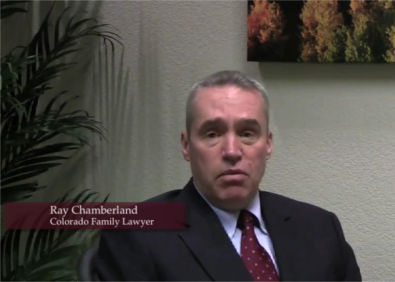
Ray Chamberland


In El Paso County following a temporary orders hearing, and before you can have a permanent orders hearing, you’re required to have mediation. We do have an Office of Dispute Resolution who provides mediation services for the county, and you’re entitled to use them for your mediation, or you can hire a private mediator. If you have an attorney it will be their decision as to whether or not you use private mediation or you use the county folks.

A mediator is a paid individual, typically an attorney who’s very familiar, in our case with family law, and they would try to assist you. If you’re using an Office of Dispute Resolution for example, they have a two-hour mediation where you each pay a fixed fee for the two hours, and you and your attorney would be in one room, the other party and their attorney if they have one, would be in the other room and the mediator would sort of do shuttle diplomacy going back and forth between the two, trying to resolve any remaining case issues that have not been settled so far.

If you can reach a mediation, a mediated agreement, you can write it up, file it with the court and you may not even have to go to court after that for a final orders hearing. So mediation can be a powerful tool to help you resolve remaining issues in divorce cases.

By: Ray Chamberland

In El Paso County following a temporary orders hearing, and before you can have a permanent orders hearing, you’re required to have mediation. We do have an Office of Dispute Resolution who provides mediation services for the county, and you’re entitled to use them for your mediation, or you can hire a private mediator. If you have an attorney it will be their decision as to whether or not you use private mediation or you use the county folks.

A mediator is a paid individual, typically an attorney who’s very familiar, in our case with family law, and they would try to assist you. If you’re using an Office of Dispute Resolution for example, they have a two-hour mediation where you each pay a fixed fee for the two hours, and you and your attorney would be in one room, the other party and their attorney if they have one, would be in the other room and the mediator would sort of do shuttle diplomacy going back and forth between the two, trying to resolve any remaining case issues that have not been settled so far.

If you can reach a mediation, a mediated agreement, you can write it up, file it with the court and you may not even have to go to court after that for a final orders hearing. So mediation can be a powerful tool to help you resolve remaining issues in divorce cases.

By: Ray Chamberland

Family Law lawyers listing in CO.
Family Law Articles

Arizona Dissolution of Marriage

In divorce, many issues require a resolution. Those issues can be resolved either by you or by the court before you can…

Read More

A Judge Can Order a Parent to Attend Counseling in Arizona

A Judge Orders a Parent to Attend Domestic Violence Counseling in Arizona Can a judge order a parent in a child custody…

Read More